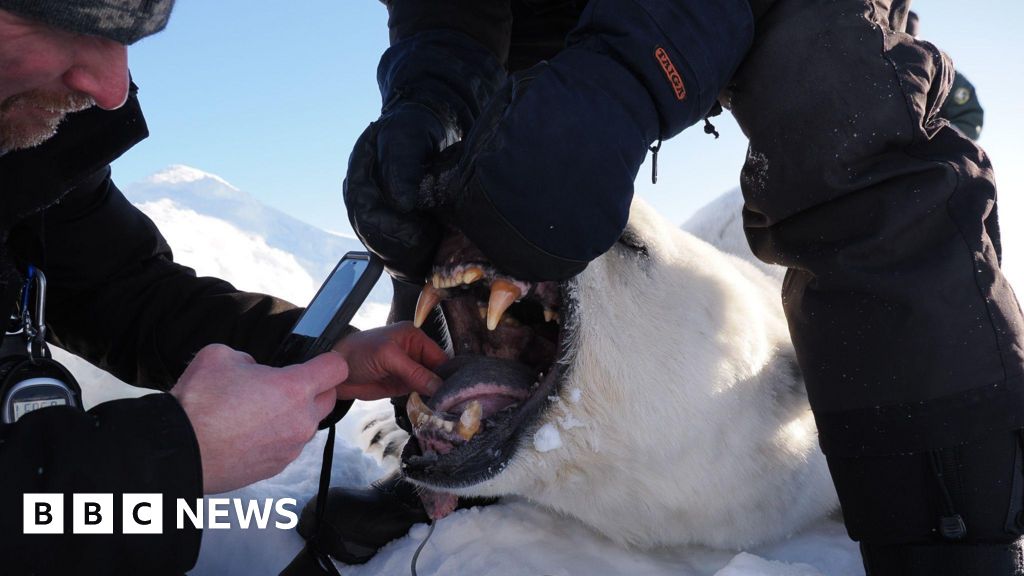
Polar bears on Norwegian islands fatter and healthier despite ice loss, scientists say
BBC • 1/29/2026
Summary
Recent research indicates that polar bears on the Svalbard archipelago in Norway are exhibiting improved health and increased body fat, despite the ongoing loss of sea ice in their habitat. Scientists have observed that these bears are adapting their diets to include more terrestrial prey, which has contributed to their enhanced condition. This development highlights a significant adaptive response of polar bears to climate change, showcasing their resilience in the face of environmental challenges. The ability of these bears to shift their feeding habits underscores the complex interactions between wildlife and their ecosystems, particularly as climate change alters traditional habitats. This story resonates beyond immediate news due to its implications for conservation efforts and the broader understanding of species adaptation. It reflects a historical pattern where wildlife has had to adjust to changing environments, emphasizing the importance of studying these adaptations to inform future conservation strategies. As climate change continues to impact polar regions, the health of species like the polar bear serves as a critical indicator of ecosystem health and resilience.
Advertisement
Lindy Score Breakdown (V4.2)
Story Timeline
- 2026-01-29Polar bears on Norwegian islands fatter and healthier despite ice loss, scientists say (current)
AnalysisRisk 20
Same Story from 2 sources

Breaking Similar stories




Anti-Lindy Similar stories