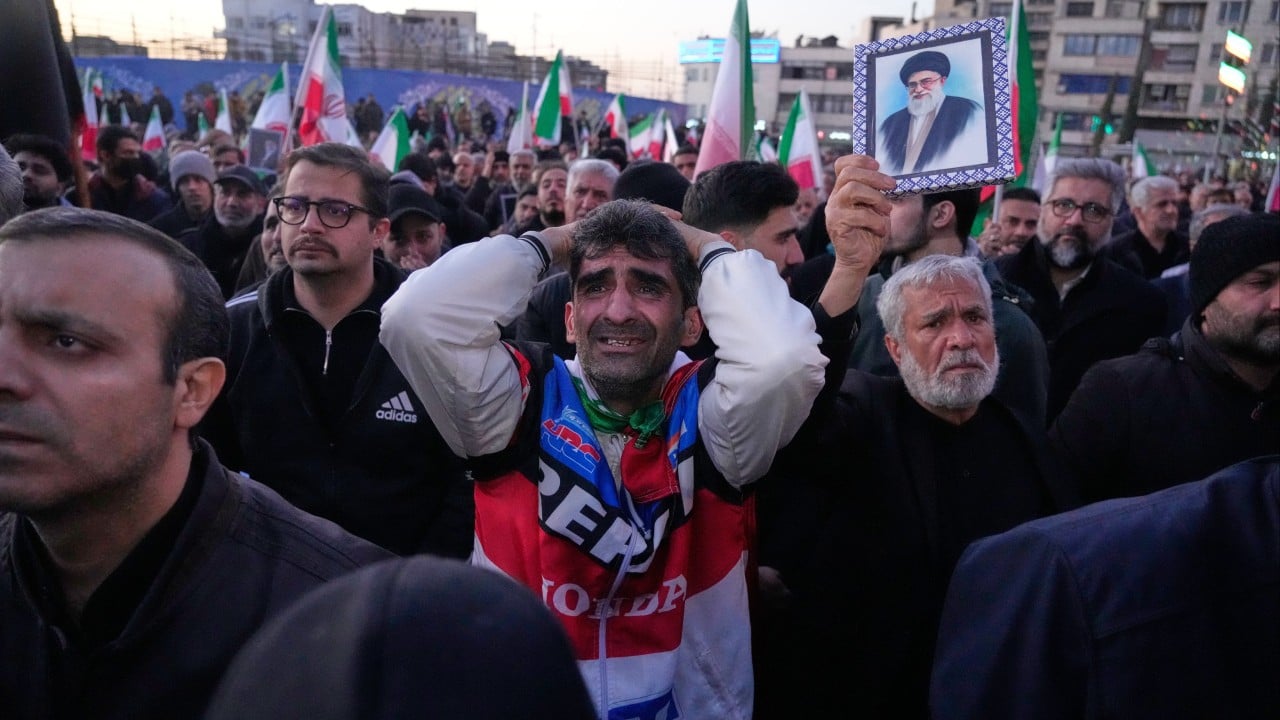
The King is Dead, Long Live the King
This concept illustrates how an established political system, even after the death of a dominant leader, often possesses inherent mechanisms and institutional resilience to ensure continuity rather than collapse. The story shows Iran's regime immediately closing ranks, activating constitutional succession processes, and forming a temporary leadership council to maintain stability. This emphasizes the enduring nature of the office and the system over the individual incumbent.
The King is Dead, Long Live the King
There's a peculiar elegance to the ancient proclamation: "The King is Dead, Long Live the King!" At first blush, it sounds like a morbid paradox, a swift, almost heartless dismissal of the fallen monarch. Yet, its true genius lies not in mourning the individual, but in celebrating the unwavering continuity of the office, the system, the very idea of governance itself. It’s a declaration that the throne is never truly empty, that the machinery of state grinds on, impervious to the mortality of its temporary occupants.
This phrase, famously associated with French monarchical succession, isn't merely a historical curiosity. It embodies a profound insight into the Lindy nature of institutions. When an office or a system has persisted through countless successions, through the deaths of many powerful individuals, it suggests a robustness, a deep-seated resilience that transcends any single leader's lifespan. The office has a Lindy life, one that far outstrips the ephemeral existence of any incumbent. It's an affirmation that the structure is more enduring than its current inhabitant, a testament to its inherent mechanisms for self-preservation and transition.
Consider, for a moment, the Papacy. When a Pope dies, the world holds its breath, but only briefly. The intricate, ancient rituals of the conclave immediately commence. The College of Cardinals convenes, and within weeks, sometimes days, white smoke billows from the Sistine Chapel, announcing a new successor. The death of John Paul II, a figure of immense global stature and influence, did not plunge the Catholic Church into chaos or existential doubt. Instead, the institution, honed by two millennia of transitions, seamlessly moved to elect Benedict XVI, and later, Francis. The Chair of Peter is never truly vacant; the institution endures, a testament to its deeply embedded, self-renewing processes.

This same principle, stripped of its monarchical regalia, is playing out in real-time in Iran. With the passing of Ayatollah Ali Khamenei, a leader who had dominated the Islamic Republic for nearly four decades, many outside observers immediately speculated about the regime's imminent collapse. Yet, what we’ve witnessed is a textbook demonstration of the "Long Live the King" phenomenon. The Iranian constitution, itself a product of an enduring system, immediately activated its succession protocols. A temporary leadership council was swiftly formed, security institutions closed ranks, and the outward signs point not to rupture, but to a hardening continuity.
The system, it seems, has inherent mechanisms for survival. It's designed to absorb the shock of an individual’s departure, to quickly re-establish equilibrium. While the character of the new leadership might shift – perhaps becoming more aggressive, more conservative, or even subtly reformist – the overarching structure, the office, the Islamic Republic itself, appears steadfast. The "king" may be dead, but the "kingship" persists, ready to be occupied by the next in line.
And yet, while the immediate continuity is often striking, it begs a deeper question: does the enduring form guarantee an enduring essence? Or can a system, even one with immense Lindy resilience, slowly transform from within, becoming something subtly but profoundly different under a new, less dominant, or even more ruthless hand?