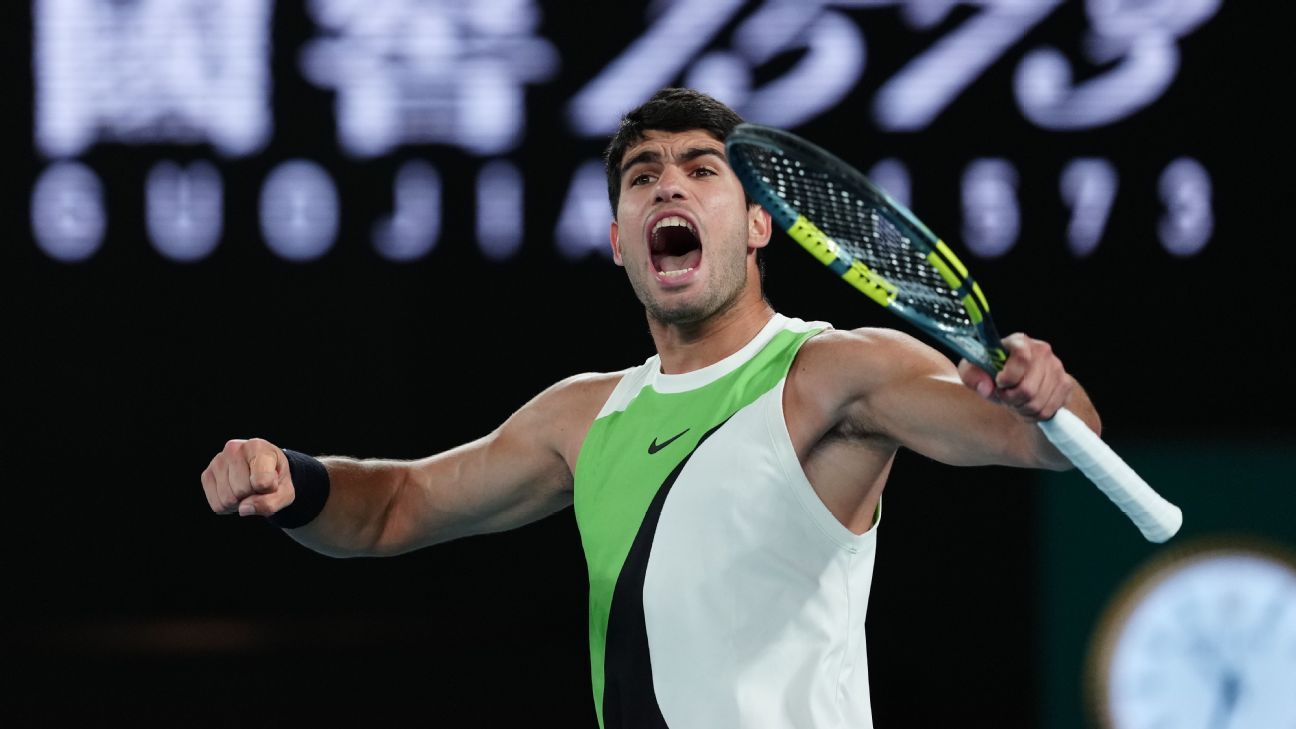
The Changing of the Guard
The story illustrates the transition of dominance from an established legend, Novak Djokovic, to a rising star, Carlos Alcaraz. This event signifies a generational shift in the sport's hierarchy, where new talent emerges to challenge and eventually succeed the previous era's dominant figures, reshaping the competitive landscape.This event is important because it is the definitive end of the transition period. The records have fallen, the old guard has been defeated on their strongest fortress (Djokovic in Australia), and a new, younger, more dynamic philosophy of tennis has taken the throne.
The Shift: When the Guard Changes
The recent echoes from Melbourne weren't merely the roar of a crowd; they were the sound of history turning a page. Carlos Alcaraz, with his electrifying triumph at the Australian Open, didn't just complete a career Grand Slam – he performed a ritual as ancient and compelling as sport itself. He denied Novak Djokovic a record 25th major, not just beating a man, but challenging an era. This wasn't merely a victory; it was a definitive moment in the long, recurring drama we call the changing of the guard.

This phenomenon, much like the Lindy effect itself, is a pattern that has endured through the ages because it speaks to a fundamental truth of human endeavor: nothing lasts forever, and renewal is an inevitability. It's the moment when the established order, often a titan of unparalleled dominance, is finally confronted and surpassed by a new, vibrant force. It’s not simply about one individual besting another; it’s about a generational shift, a new philosophy taking root, a fresh dynamic reshaping the landscape. The old guard, for all its accumulated wisdom and proven might, eventually finds itself up against an energy it can no longer fully contain, a future it cannot wholly resist.
We see this narrative woven through the tapestry of human history. Consider the transition from the Big Band era to the explosive arrival of rock and roll in the mid-20th century. For decades, the smooth, orchestrated sounds of swing bands and crooners like Frank Sinatra defined popular music. They were the established legends, their melodies the soundtrack of a generation. Then, seemingly overnight, came the raw, rebellious energy of Elvis Presley and a host of guitar-wielding youngsters. Their music was louder, faster, and utterly different. It wasn't just a new song; it was a new rhythm of life. The old guard didn't vanish, but the throne of cultural dominance undeniably shifted, giving way to a sound that reflected a new generation's spirit.
In tennis, the Australian Open win by Alcaraz feels precisely like this. Djokovic, the undisputed monarch of Melbourne, on his strongest fortress, was not merely defeated; his era was definitively challenged. Alcaraz embodies a younger, more dynamic philosophy of tennis – a blend of power, agility, and audacious shot-making that feels like the sport's next evolution. The records have fallen, the seemingly impregnable stronghold has been breached, and a new, exhilarating energy has taken the throne. This isn't to diminish the incredible legacy of Djokovic, Federer, or Nadal; rather, it’s to acknowledge the natural, cyclical rhythm of ascendancy.
So, as the dust settles and Alcaraz begins his reign, we are left to ponder: What does this definitive changing of the guard mean for the sport's future? Will this new era usher in a period of singular dominance, or will the competitive landscape remain a vibrant, contested arena for many years to come?