New NASA Pictures Reveal SpaceX Crash's Devastation On The Moon's Magnificent Desolation
Jalopnik • 8/21/2026 – 8/22/2026
Summary
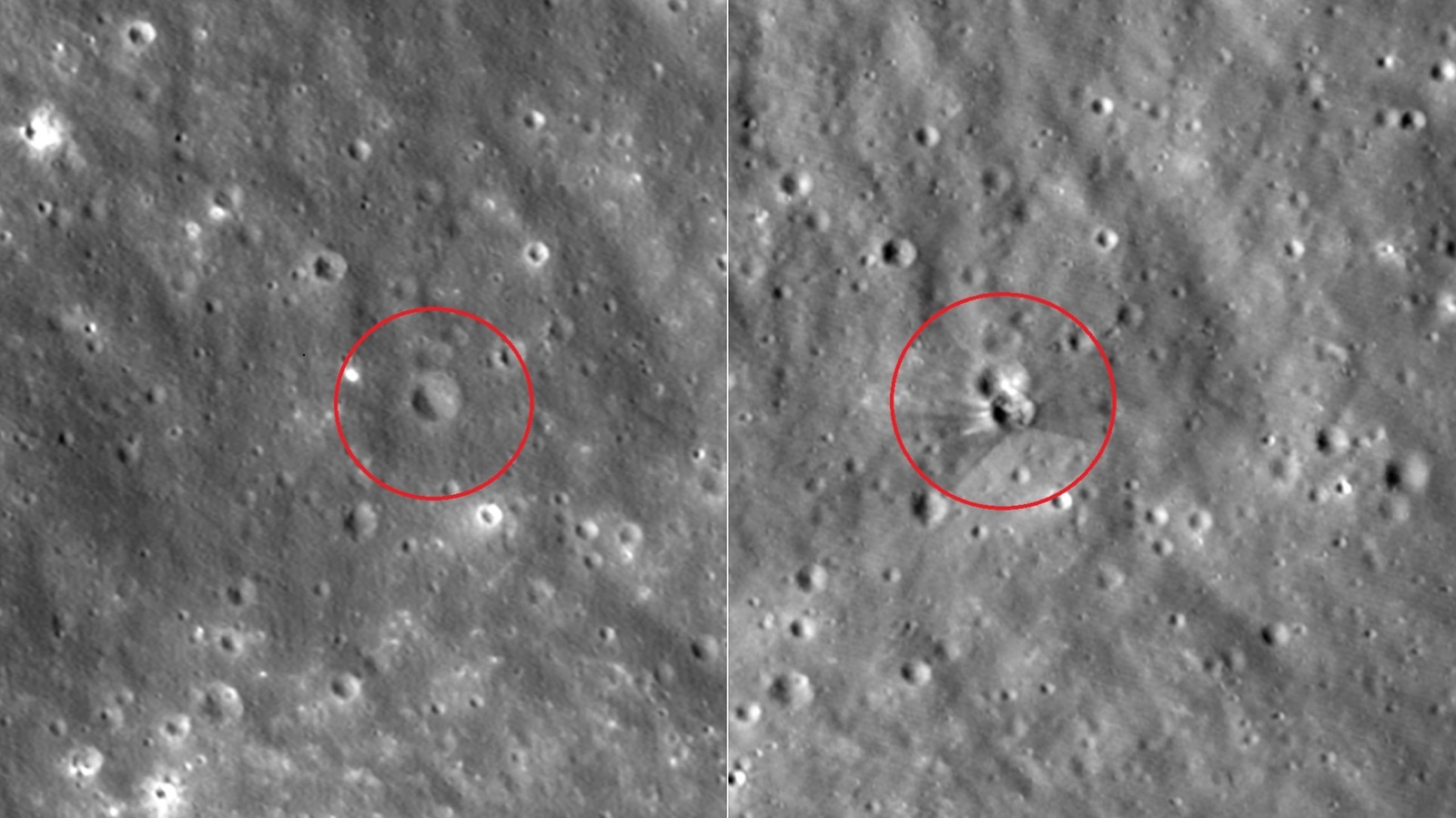
On August 5, 2023, at approximately 2:35 AM ET (0635 GMT), the upper stage of a SpaceX Falcon 9 rocket crashed into the Moon, impacting at a speed of about 5,400 mph (8,690 km/h). The upper stage weighed approximately 9,000 pounds (around 4,000 kg) and created a crater estimated to be between 60 and 89 feet wide. The impact site is located near the Einstein and Bell craters on the lunar surface. Although the collision was not visible from Earth, there was speculation about the possibility of observing a plume of debris rising above the lunar surface following the impact (Wired, Scientific American, Space.com). The Korea Aerospace Research Institute's Danuri lunar orbiter later provided images of the resulting crater, which served as visual evidence of the collision. NASA is actively monitoring the situation and plans to utilize ground-based telescopes and space-based assets to gather data related to the event. The collision poses no danger to Earth, as confirmed by NASA and SpaceX, and was attributed to a combination of solar activity and gravitational forces directing the rocket's second stage toward the Moon (Scientific American, Space.com). This incident has raised concerns regarding the increasing amount of space debris in cislunar space, particularly as the frequency of rocket launches to orbit and the Moon is expected to rise in the coming years. NASA and SpaceX are currently collaborating to develop strategies aimed at preventing similar upper stage collisions in the future. This partnership underscores the potential hazards posed by space debris and the need for proactive measures as lunar exploration activities increase (Scientific American, Space.com). The event serves as a reminder of the challenges associated with space debris and its implications for future missions to the Moon and beyond. As the number of space missions increases, such collisions are anticipated to become more frequent, necessitating measures to ensure the safety and sustainability of space operations (Scientific American, Wired).
Advertisement
Lindy Score Breakdown (V4.2)
Score BreakdownRisk 50
Stories gain Lindy status through source reputation, network consensus, and time survival.
Breaking Similar stories







Anti-Lindy Similar stories