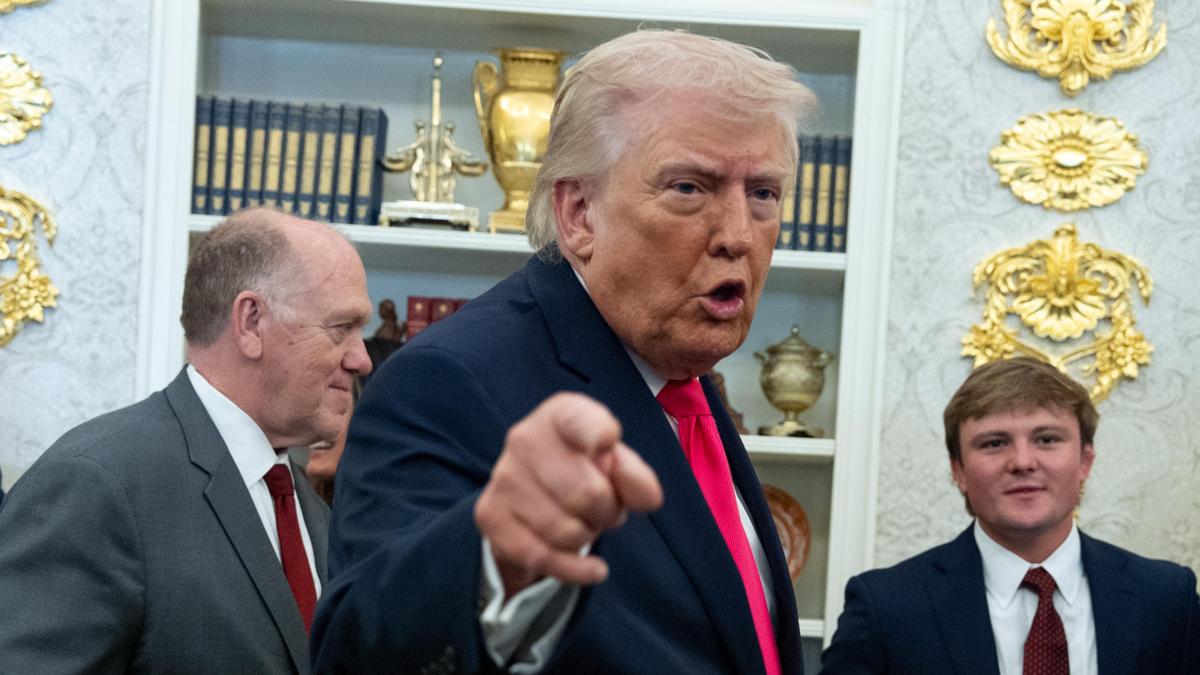
Trump Returns to a Familiar Role: Sowing Trade Chaos
The New York Times • 1/22/2026 – 1/25/2026
Summary
Former President Donald Trump has once again stirred controversy by quickly changing his stance on tariffs related to Greenland, showcasing his tendency to disrupt established international norms. This incident occurred within the context of his broader approach to trade policy, which has often involved abrupt shifts and unpredictable decisions. The event highlights Trump's ongoing influence in global trade discussions, even after his presidency. This situation underscores a recurring theme in Trump's political strategy: the willingness to challenge and dismantle traditional diplomatic frameworks. His actions reflect a historical pattern where leaders leverage trade as a tool for negotiation and power, often leading to instability in international relations. The implications of such behavior extend beyond immediate trade disputes, as they can reshape alliances and economic policies for years to come. Trump's approach resonates with a broader trend of populist leaders who prioritize national interests over global cooperation, raising questions about the future of international trade agreements and economic collaboration. This story remains relevant as it illustrates the ongoing tensions between national sovereignty and global interdependence, a dynamic that will continue to influence political discourse and economic strategies worldwide.
Advertisement
Lindy Score Breakdown (V4.2)
Score BreakdownRisk 35
Stories gain Lindy status through source reputation, network consensus, and time survival.
Breaking Similar stories






Anti-Lindy Similar stories