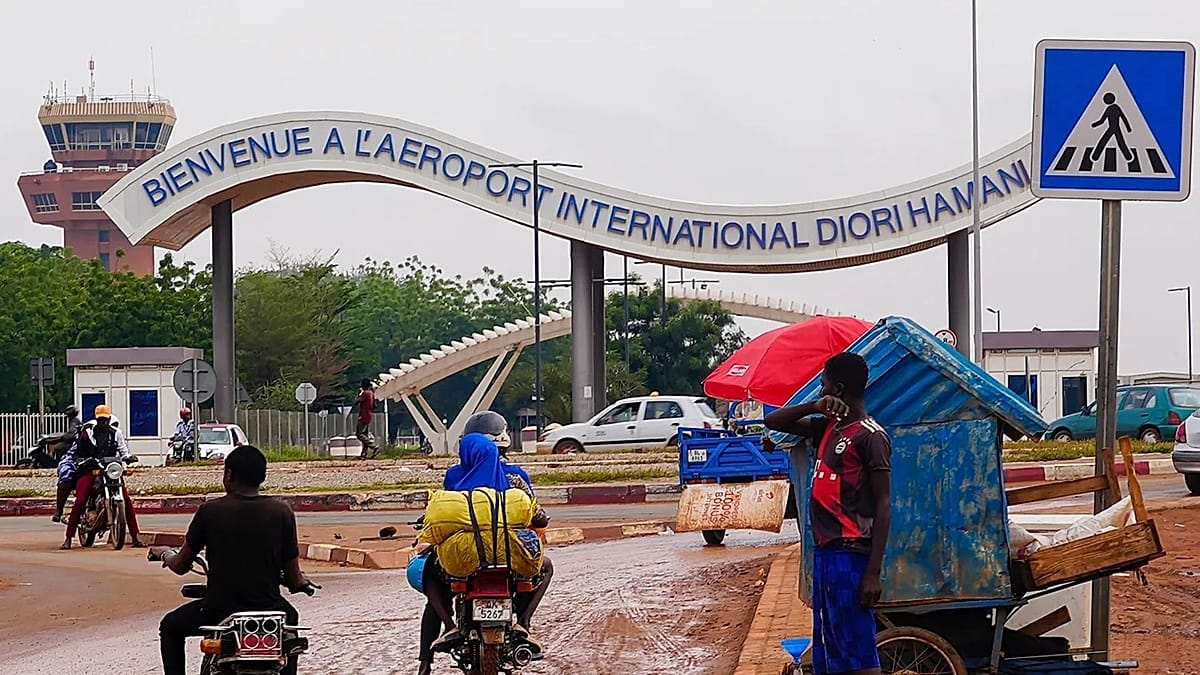
Heavy gunfire in Niger capital as clashes reported at presidential palace
Euronews • 8/29/2026
Summary
Heavy gunfire and explosions have been reported in the capital of Niger, where clashes are occurring at the presidential palace. This unrest comes amid ongoing challenges faced by the military junta that has ruled Niger for three years. The junta has struggled to effectively address the persistent jihadist violence that has plagued the region, similar to the situations in neighboring countries such as Mali and Burkina Faso. The military junta in Niger, like its counterparts in Mali and Burkina Faso, has been grappling with the rise of jihadist groups, which have increasingly threatened security and stability in the Sahel region. The situation has led to heightened tensions and instability, prompting military responses that have not fully resolved the underlying issues of violence and insecurity. As the clashes unfold, the implications for governance and public safety in Niger remain uncertain. The military's ability to maintain control and address the jihadist threat is critical, as the junta's legitimacy and effectiveness are being tested by both internal and external pressures. The ongoing violence underscores the broader challenges faced by military regimes in the region as they attempt to navigate complex security landscapes while managing public discontent.
Advertisement
Lindy Score Breakdown (V4.2)
Score BreakdownRisk 50
Stories gain Lindy status through source reputation, network consensus, and time survival.
Breaking Similar stories