LINK spacecraft gets close to NASA's Swift Observatory, but not close enough to save it
Space.com • 9/10/2026 – 9/11/2026
Summary
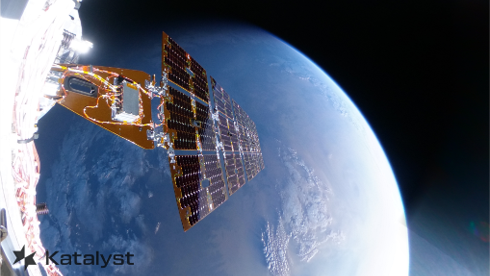
Operations aboard the Katalyst Space LINK spacecraft continue, despite its failure to complete the mission of boosting the orbit of NASA's Swift Observatory. The LINK spacecraft was launched in early July with the objective of approaching the Swift observatory, which is located approximately 347 kilometers (216 miles) above Earth. The mission aimed to grapple onto the Swift observatory and elevate it to a higher orbit of around 600 kilometers (373 miles) to extend its operational life. However, ongoing attitude-control issues with the LINK spacecraft prevented it from successfully connecting with the Swift Observatory, leading to the cancellation of the orbit-boosting efforts (Fox Weather, Space.com). NASA has officially canceled the mission to rescue the Neil Gehrels Swift Observatory, which has made significant contributions to gamma-ray astronomy. The cancellation comes as the observatory is expected to re-enter Earth's atmosphere later this year. The mission had a budget of $30 million, and its abandonment underscores the challenges faced in extending the operational life of aging space instruments (Fox Weather, Scientific American). Despite the setback, Katalyst Space indicated that the LINK craft would still attempt to conduct rendezvous and proximity operations with the Swift observatory, shifting its focus to demonstrating rendezvous technologies for in-space servicing (Fox Weather). Following the failure of the rescue mission, NASA's Swift space telescope has resumed its science observations, although its future remains uncertain (Space.com, Ars Technica). The Swift observatory has played a crucial role in observing gamma-ray bursts and other transient cosmic events, marking a significant moment in its operational history (Science Magazine, Space.com).
Advertisement
Lindy Score Breakdown (V4.2)
Score BreakdownRisk 50
Stories gain Lindy status through source reputation, network consensus, and time survival.
Breaking Similar stories