Astronomers discover two stars that joined together to form a binary system just 60 years ago
Space.com • 9/9/2026 – 9/10/2026
Summary
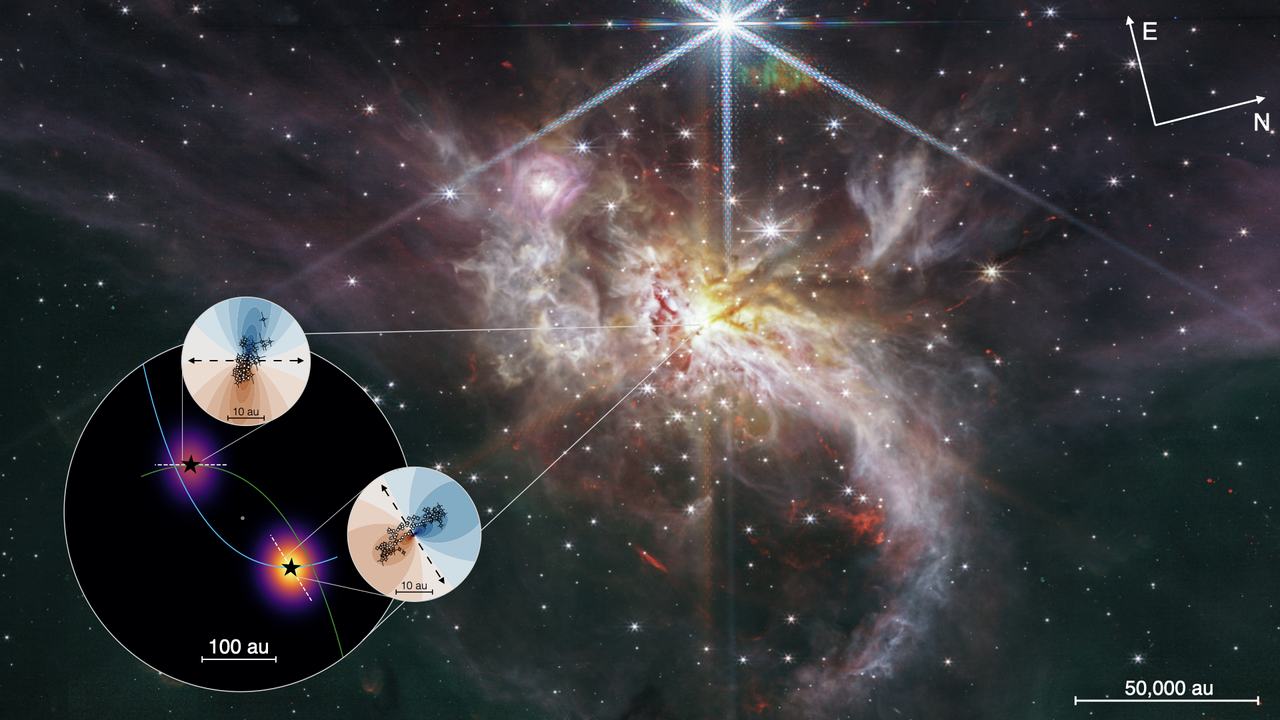
Astronomers have discovered two stars that merged to form a binary system approximately 60 years ago. This finding was made possible through observations conducted using the Atacama Large Millimeter/submillimeter Array (ALMA). The research team has been monitoring the motions of these two young, massive stars for nearly eight years, providing a detailed three-dimensional view of the system during its formation. The binary star system exhibits a highly elongated orbit, indicating a unique dynamic between the two stars. Additionally, the stars are surrounded by gas disks that are strongly tilted in relation to each other and to the stars' orbit. This chaotic environment suggests that the stars originated from different backgrounds, contributing to the complexity of their interaction and formation. The observations made by ALMA represent one of the most detailed insights into the assembly of a massive binary star system in real time. The data collected highlights the intricate motions and configurations of the stars and their surrounding material, offering valuable information about the processes involved in stellar formation and the evolution of binary systems. Overall, this discovery enhances the understanding of how massive stars can come together and evolve, shedding light on the dynamics of binary star systems and the conditions that lead to their formation.
Advertisement
Lindy Score Breakdown (V4.2)
Score BreakdownRisk 50
Stories gain Lindy status through source reputation, network consensus, and time survival.
Breaking Similar stories