Half a million visitors flock to Spain’s path of total solar eclipse
Euronews • 8/13/2026
Summary
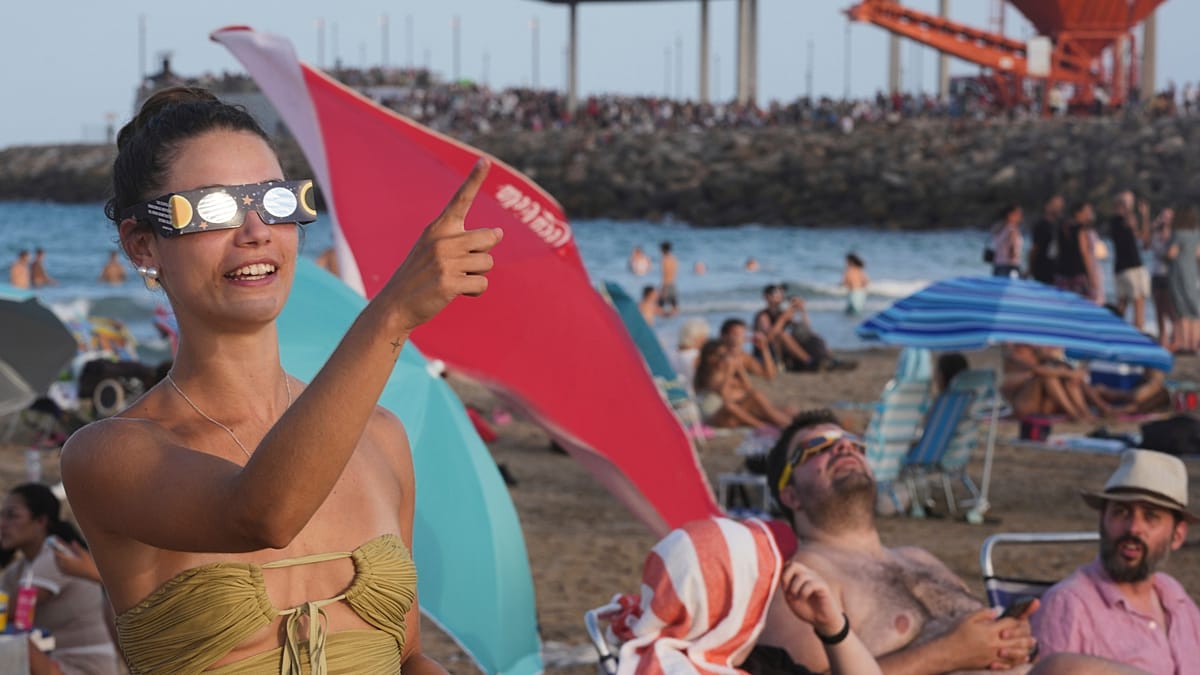
On August 12, 2023, Spain experienced its first total solar eclipse in over a century, captivating thousands of people who sought optimal viewing locations. This event marked the first total solar eclipse in mainland Europe since 2006. The path of the eclipse affected parts of Greenland and Iceland before moving across the Atlantic Ocean towards northern Spain, where it plunged parts of the country into total darkness as the Moon passed directly in front of the Sun. Reports indicate that approximately half a million visitors flocked to Spain's path of the total solar eclipse, highlighting the event's significance and the public's eagerness to participate in this rare astronomical occurrence. In anticipation of the eclipse, transportation systems were heavily utilized, with trains filled to capacity and many travelers arranging last-minute carpools to reach prime viewing spots. Social media platforms buzzed with users sharing their favorite locations to witness the eclipse. Among the popular sites was the caliphal fortress of Gormaz in Soria, which became a key vantage point, attracting both domestic and international visitors. The excitement surrounding the eclipse was palpable, with many enthusiasts traveling from Madrid to experience the phenomenon. The event drew significant public interest, with millions of people gathering at various viewing sites across the north of Spain. The eclipse not only provided a unique opportunity for observation but also fostered a sense of community among those who traveled to witness it. The spectacle created by the total solar eclipse was a momentous occasion for both locals and tourists alike, marking a historic event in Spain's astronomical history.
Advertisement
Lindy Score Breakdown (V4.2)
Score BreakdownRisk 50
Stories gain Lindy status through source reputation, network consensus, and time survival.
Breaking Similar stories










Anti-Lindy Similar stories