Researchers try to cut the genetic code from 20 to 19 amino acids
Ars Technica • 4/30/2026 – 5/1/2026
Summary
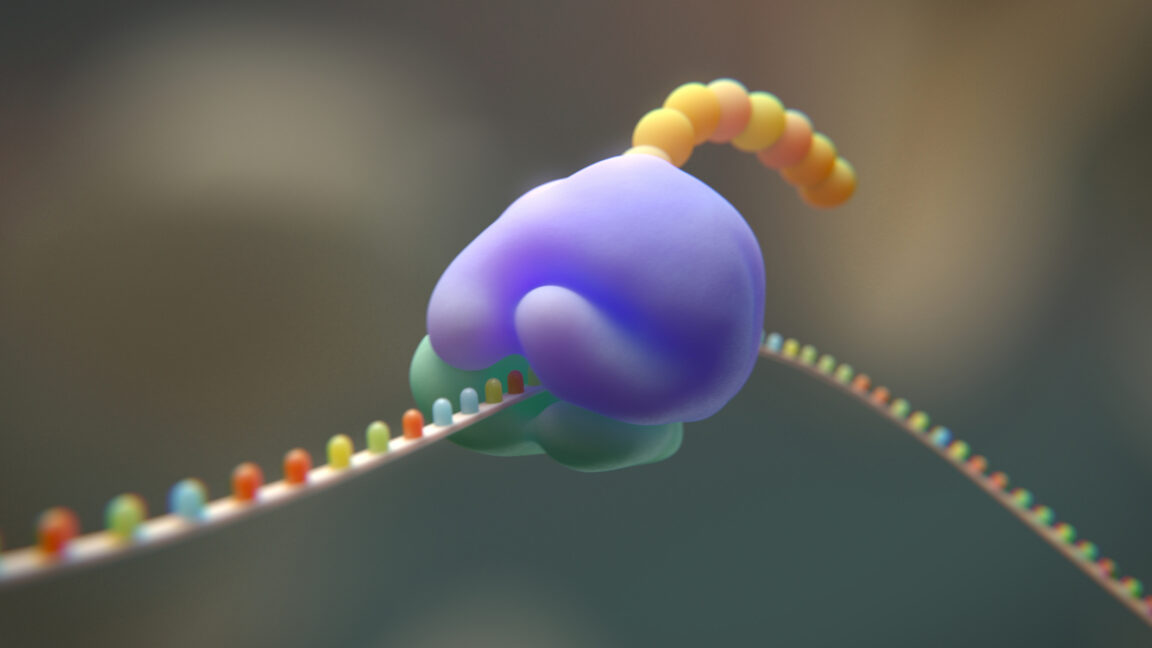
Researchers are exploring the possibility of reducing the genetic code from 20 to 19 amino acids. This effort involves reworking part of the ribosome to function with one less amino acid. The study utilizes artificial intelligence (AI) tools to facilitate this modification, aiming to determine if life’s chemistry can be simplified. In a significant experiment, scientists engineered a strain of E. coli that survived after one amino acid was designed out of many of its ribosomal proteins. This experiment serves as an early test of the hypothesis that life can sustain itself with a simplified genetic code. The use of AI in this research is pivotal, as it allows for the testing of various configurations and the assessment of the ribosome's functionality with fewer amino acids. The implications of this research could be profound, as it challenges the traditional understanding of the genetic code and the fundamental building blocks of life. By demonstrating that an organism can survive with a modified ribosomal structure, the study opens avenues for further exploration into the minimal requirements for life and the potential for synthetic biology applications. The findings contribute to the ongoing discourse on the adaptability of life and the potential for creating organisms with tailored genetic codes.
Advertisement
Lindy Score Breakdown (V4.2)
Story Timeline
- 2026-04-30Researchers try to cut the genetic code from 20 to 19 amino acids (current)
Score BreakdownRisk 55
Stories gain Lindy status through source reputation, network consensus, and time survival.
Same Story from 2 sources

Breaking Similar stories






Anti-Lindy Similar stories