The Pursuit of Excellence and Record-Breaking Achievement
The news cluster consistently reports on athletes and national teams setting new records and achieving unprecedented levels of success in the Winter Olympics. This illustrates the timeless human drive for excellence, a concept deeply rooted in philosophy (e.g., Areté) and psychology (achievement motivation). It demonstrates the continuous push to surpass previous benchmarks, optimize performance, and establish new standards of human capability and competitive achievement across various domains.
The Relentless Ascent: On Excellence and the Breaking of Records
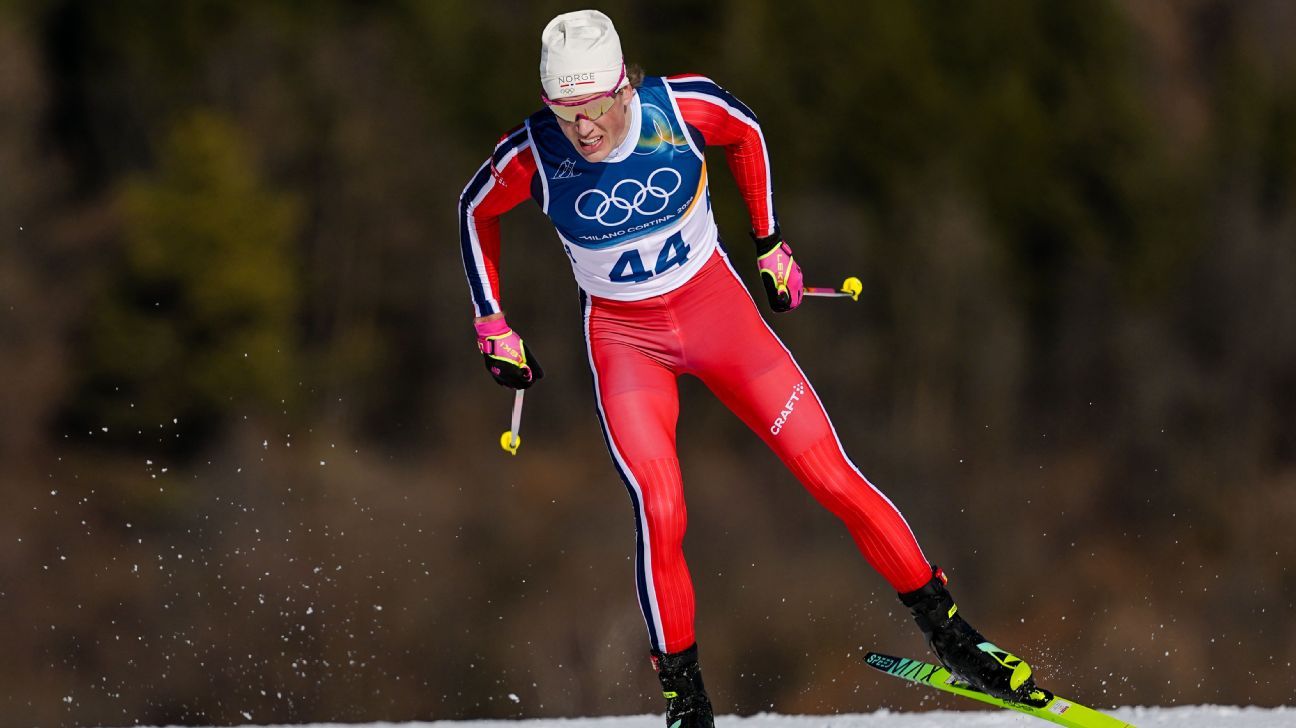
The air in the Winter Olympics is, year after year, thick not just with the crisp chill of snow and ice, but with the palpable hum of human ambition. We watch, captivated, as names like Johannes Hoesflot Klaebo etch themselves into history, not merely by winning, but by shattering previous benchmarks. A ninth gold medal in cross-country skiing, a new record for Norway's collective medal haul – these aren't just statistics; they are vivid demonstrations of a timeless, almost primal human drive. Team USA, too, sets new marks for women's events, proving that the ceiling of human capability is less a fixed point and more a constantly ascending plane.
What is it about us that compels this relentless push? Why are we not content with merely being good, or even great, but must always strive for the greatest, for the unprecedented? This impulse echoes back to the ancient Greek concept of Areté. Far more than simple virtue, Areté embodied excellence in all its forms – moral, intellectual, and physical. It was the pursuit of one's full potential, the striving to embody the highest possible quality in whatever one did. For an athlete, it meant perfecting the body, honing skill, and pushing the limits of endurance. For a philosopher, it meant rigorous thought and ethical living. It was, at its heart, a continuous journey of optimization, a refusal to settle for anything less than one's absolute best.
This isn't merely a philosophical abstraction; it's deeply ingrained in our psychology. The drive for achievement motivation, as psychologists term it, speaks to an intrinsic satisfaction derived from mastering challenges, from improving, from proving competence. It's the engine behind every new training regimen, every marginal gain sought in equipment, every daring strategy employed. It's what makes Klaebo not just a skilled skier, but a historical figure, because he didn't just win; he redefined what was possible.
Consider the ancient Olympians. While "records" in the modern sense were not meticulously tracked, the pursuit of the superlative was paramount. Legends abound of athletes whose feats seemed superhuman. Take Milo of Croton, the legendary wrestler of the 6th century BC. His strength was mythical; he was said to have carried a full-grown bull on his shoulders, consuming vast quantities of meat and wine to fuel his Herculean physique. He won six Olympic wrestling titles over an impressive span, a record of sustained dominance that, in its own era, spoke to an almost unimaginable level of physical Areté. Milo, like Klaebo today, embodied the pinnacle of human effort and achievement for his time, inspiring awe and setting a new, albeit informal, standard of what was possible.

In our current era, with precise timing, advanced analytics, and global media, the breaking of records becomes a shared human event, a collective witnessing of the expansion of our species' capabilities. Each new gold medal, each faster time, each higher jump, serves as a testament to the fact that "the best" is a fluid concept, always open to redefinition. It's a conversation between generations, a challenge laid down by those who came before, and a gauntlet picked up by those who dare to dream bigger.
But what, then, is the ultimate goal of this ceaseless ascent? If every record is destined to be broken, if every pinnacle is merely a stepping stone to a higher one, does the pursuit itself become the true reward? Or is there, in this tireless quest to surpass, an unspoken yearning for an unattainable absolute, a perfect expression of human potential that forever remains just beyond our grasp?