The Limits of Control: Human Systems and Natural Forces
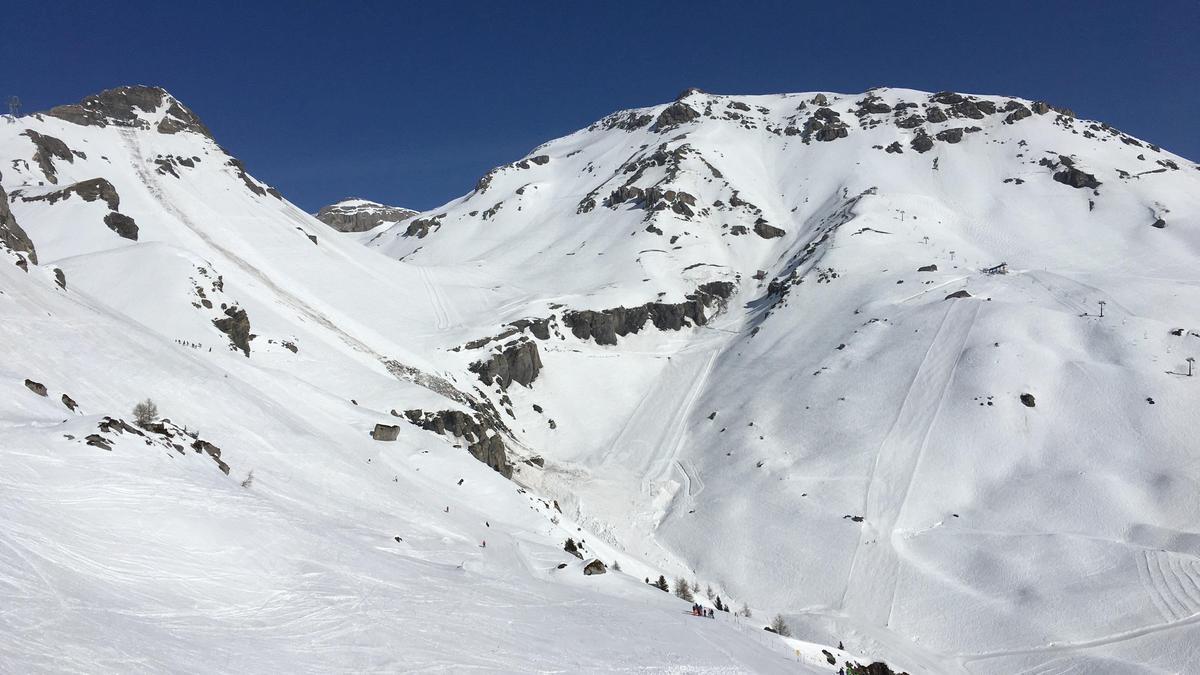
This news cluster vividly illustrates the timeless concept of humanity's inherent vulnerability to natural forces, even in an era of advanced technology and risk assessment. Despite a high-level avalanche warning (level four out of five), a train derailed, causing injuries and disruption. This event underscores the persistent challenge of predicting and fully mitigating the impact of environmental hazards on human infrastructure and activities, demonstrating that even with awareness, complete control over nature remains elusive.
The Unyielding Hand: Human Systems and Nature's Limits
The recent news from the Swiss Alps, detailing a train derailment amidst a level four avalanche warning, offers a stark, contemporary echo of an ancient truth. Here we are, in an age of sophisticated engineering, predictive modeling, and instant global communication, yet a locomotive, a marvel of human ingenuity, can still be brought to a halt, or worse, by a sudden, indifferent rush of snow. It’s a recurring tableau, one that gently, or sometimes violently, reminds us of the perennial dance between our grand ambitions and nature’s unyielding forces.
This isn't merely an unfortunate accident; it's a profound demonstration of a pattern that has endured for as long as humans have built structures and systems. The idea, often implicitly understood through the lens of the Lindy Effect, suggests that problems that have persisted across millennia are likely to continue persisting. Our desire to tame, predict, and ultimately control our environment is as old as our first shelters, yet the very persistence of this struggle points to its fundamental, perhaps eternal, nature. We develop ever more intricate risk assessments, stronger materials, and faster communication, but the underlying vulnerability remains, a constant whisper, or sometimes a roar, from the wild.
Across cultures and eras, humanity has grappled with this tension. We build cities on floodplains, construct infrastructure through seismic zones, and carve paths through mountainsides prone to avalanches. Each time, we learn, we adapt, we innovate, pushing the boundaries of what's possible. Yet, each time, nature, in its vast indifference, finds a new way to assert its dominance, revealing the inherent fragility of even our most robust designs. It’s a humbling cycle, one that challenges our often-cherished belief in our own mastery.
Consider the devastating Lisbon earthquake of 1755. This wasn't merely a geological event; it was a philosophical earthquake, shaking the very foundations of Enlightenment thought. Lisbon, a thriving European capital, was utterly destroyed on All Saints' Day. The subsequent tsunami and fires obliterated much of what remained. This catastrophe didn't just kill tens of thousands; it forced thinkers like Voltaire to confront the limits of human reason and divine providence in the face of such indiscriminate destruction. No amount of urban planning, advanced navigation, or theological contemplation could prevent the earth from simply tearing itself apart, engulfing human enterprise in its wake. It was a stark, brutal reminder that even in an age of burgeoning scientific understanding, there were forces utterly beyond human command.
Today, with all our sensors and algorithms, we can issue warnings, calculate probabilities, and even attempt preventative measures. But what the Swiss derailment reminds us is that these are still just sophisticated attempts to mitigate risk, not to eliminate it. We strive for perfect control, but nature operates on a different scale, with different rules, often with a patience that dwarfs our fleeting civilizations. Our systems are elegant, complex, and often astonishingly resilient, but they are ultimately extensions of our own finite capabilities.
So, as we continue to push the boundaries of technology and expand our footprint across the globe, how do we reconcile our insatiable drive for control with the enduring, unpredictable power of the natural world? Are we forever destined to build higher walls, only for the tide to rise just a little bit more?