The Human Cost of Conflict
This news cluster starkly illustrates the devastating human toll of ongoing conflict, particularly on the most vulnerable. The tragic death of a seven-month-old baby, caught in the crossfire of political and territorial disputes, serves as a poignant example of how geopolitical tensions and military actions inflict profound and irreversible suffering on innocent civilians, shattering families and perpetuating cycles of grief and resentment. It highlights the universal tragedy inherent in prolonged conflict, transcending specific political narratives to underscore the fundamental loss of life and innocence.
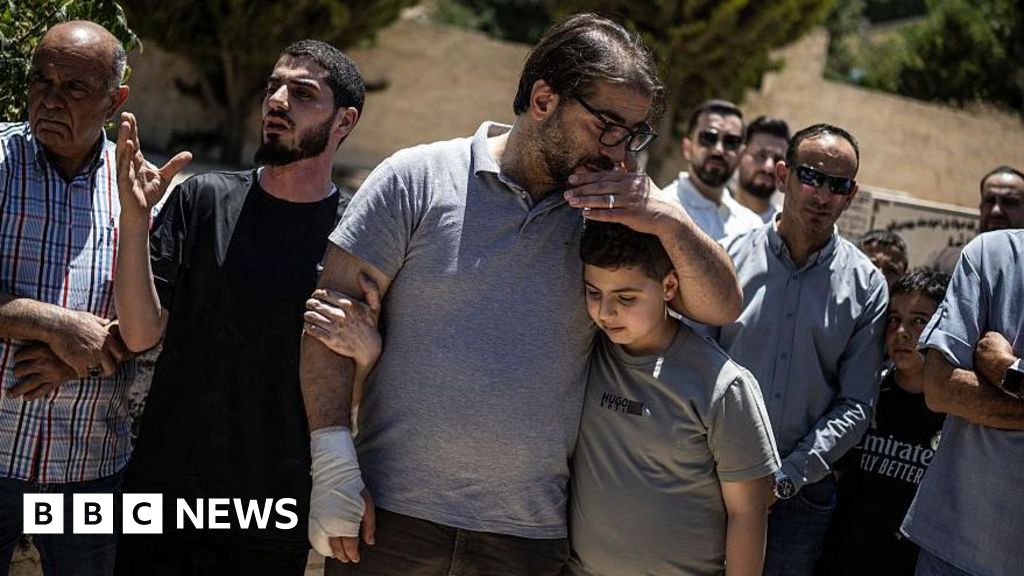
The news from the West Bank arrives not as a distant dispatch, but as a chilling echo through time. A seven-month-old baby, Sam, his tiny life extinguished in the crossfire of a conflict he could not possibly comprehend. His father, Fahd Abou Haikal, carrying his son’s shrouded body, is a universal figure of grief, a tableau repeated endlessly across millennia. This stark image, tragic and immediate, forces us to confront an enduring, devastating truth about human conflict: its most profound cost is always measured in shattered innocence.
There are certain patterns of human experience that, like ancient stories or durable technologies, persist not by accident, but because they tap into something fundamental, something deeply ingrained in our collective narrative. We might call this a kind of societal Lindy Effect: what has lasted in human suffering, what has recurred across epochs, often speaks to a persistent challenge we have yet to overcome. The sorrow of parents burying their children due to geopolitical strife is one such pattern. It is not merely a consequence; it is the very bedrock upon which the edifice of conflict rests, and from which cycles of resentment are forged.
This isn't a cost tallied in economic downturns or strategic losses, but in the unquantifiable void left by a life unlived, a future stolen. It transcends specific political narratives, borders, or ideologies. Whether the bullet is fired in Hebron today or the bomb dropped on a city decades ago, the fundamental loss is the same: the innocent, the vulnerable, become collateral. Their lives are not statistics but singular universes, abruptly extinguished, leaving behind ripples of grief that spread far beyond the immediate family, poisoning hope and peace for generations.

Consider the children of the Second World War. From the rubble-strewn streets of London during the Blitz, where toddlers sought shelter in underground stations, to the frozen landscapes of Leningrad, where thousands perished from starvation during the siege, children were not merely bystanders but direct victims. Their small bodies were caught in the vortex of grand political ambitions and territorial disputes. The image of a child's toy lying abandoned amidst the debris of a bombed-out home in Coventry or Dresden is no less heart-wrenching than the sight of Sam’s small coffin today. It is the same story, told anew, of the most defenseless paying the ultimate price for the decisions of adults.
The enduring tragedy lies in this recurrence. The human heart understands this suffering instinctively, regardless of the banner under which it occurs. It is a testament to our shared humanity that such images of loss resonate so deeply, yet it is a profound indictment of our collective wisdom that we allow them to repeat. Each funeral for a child lost to conflict is a stark reminder that some lessons, despite their brutal clarity, remain unlearned.
Given the ancient, persistent rhythm of this particular heartbreak, one is left to wonder: what exactly does it take for humanity to finally break this cycle, to truly value the sanctity of every innocent life above all other considerations?