The Ever-Expanding Horizon of Scientific Discovery
The news cluster highlights a dramatic increase in the detection and cataloging of gravitational waves and cosmic collisions. This significant expansion of observable phenomena directly illustrates the timeless concept of the ever-expanding horizon of scientific discovery. It demonstrates how new technologies and persistent inquiry continuously push the boundaries of human knowledge, revealing previously unseen or theoretical aspects of the universe and deepening our understanding of its fundamental workings. This process is a hallmark of scientific progress throughout history and a testament to humanity's ongoing quest for knowledge.
The Ever-Expanding Horizon of Scientific Discovery
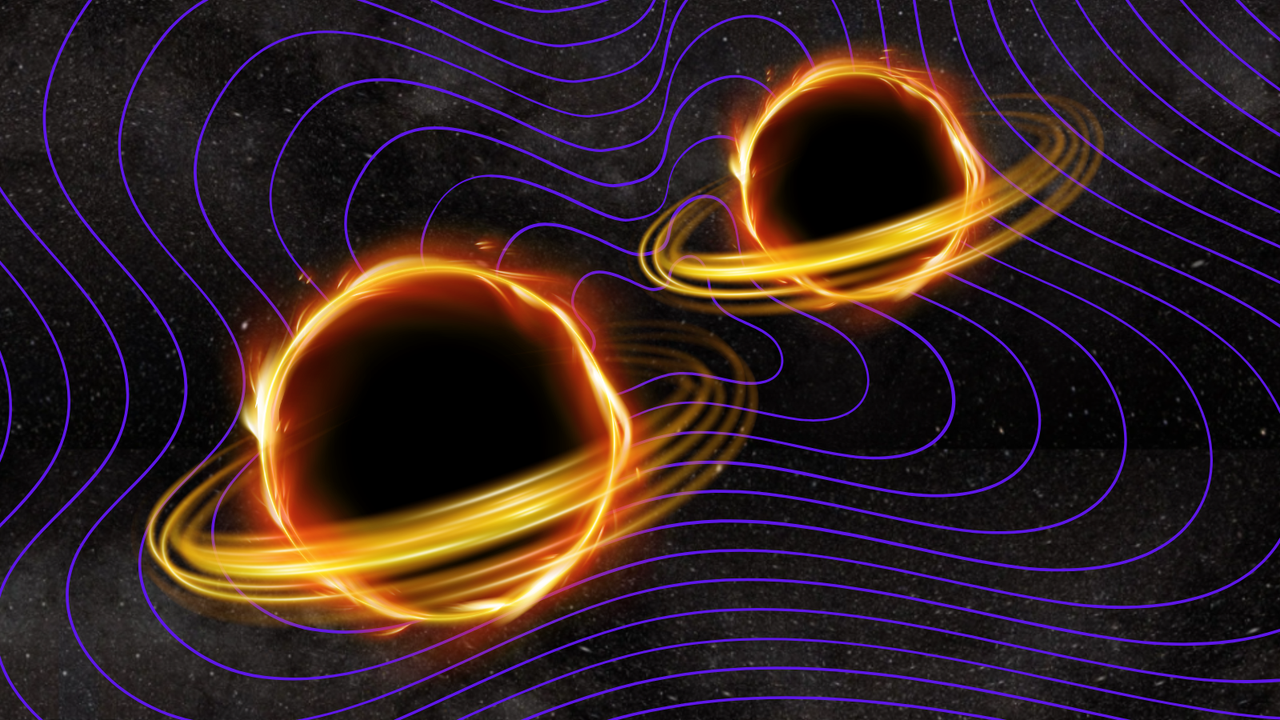
The universe, it seems, has decided to hum a little louder for us lately. News from the cosmic frontier reveals that our patient, persistent listening has been rewarded with a veritable symphony of spacetime ripples. The catalog of gravitational waves, those fleeting whispers from the most violent events in the cosmos – colliding black holes and neutron stars – has more than doubled. This isn't just an incremental update; it's a dramatic expansion of our sensory perception of the universe, akin to suddenly gaining a new sense. And in this thrilling expansion, we find a profound echo of a timeless truth: the horizon of scientific discovery is not a fixed line, but an ever-receding, ever-expanding vista.
For millennia, humanity gazed at the stars, theorizing, observing with the naked eye, and building intricate models based on limited data. Our understanding was bounded by what we could perceive directly or infer from those perceptions. Then, a new tool emerged, and with it, a new reality. Consider for a moment the profound shift brought about by Galileo Galilei in the early 17th century. When he turned his rudimentary telescope skyward, he didn't just see brighter stars; he saw a previously invisible universe. The Moon, far from a perfect celestial sphere, was pocked with craters. Jupiter was orbited by its own moons, challenging the geocentric dogma that all celestial bodies revolved around Earth. Venus cycled through phases like our Moon, a direct confirmation of its orbit around the Sun. Galileo's telescope didn't just add details; it fundamentally reordered our cosmic understanding and opened up an entirely new realm of observable phenomena that had always been there, just beyond our grasp.
A Timeless Unveiling
This pattern, where new technologies and persistent human curiosity unveil previously theoretical or entirely unseen aspects of reality, is a hallmark of scientific progress throughout history. It is a testament to the Lindy effect in action within the realm of knowledge itself: the longer this quest for understanding has persisted, the longer it is likely to continue. What LIGO, Virgo, and KAGRA are doing today with gravitational waves is precisely what Galileo did with the telescope. They've given us a new instrument, a new "ear" to listen to the universe's most cataclysmic events, transforming theoretical predictions into observable, cataloged facts. We are now "hearing" heavy, fast-spinning, and even lopsided black holes colliding, painting a far richer, more dynamic picture of cosmic mechanics than was imaginable even a few decades ago.
Each new detection isn't just a data point; it's an invitation to new questions, new theories, and new instruments. What else is out there, humming or vibrating, just beyond the reach of our current technology? What fundamental forces or particles might manifest in ways we are only beginning to conceive? Every expansion of our knowledge horizon reveals not a dwindling unknown, but a vaster, more intricate unknown beyond it. The more we learn, the more we realize the immensity of what we do not yet comprehend.
So, as the universe continues to reveal its secrets in waves we can now detect, one might ponder: what new sense, what unheard frequency, what unimagined dimension awaits discovery, just beyond the edge of our current perception?