The Continuum of Cognition
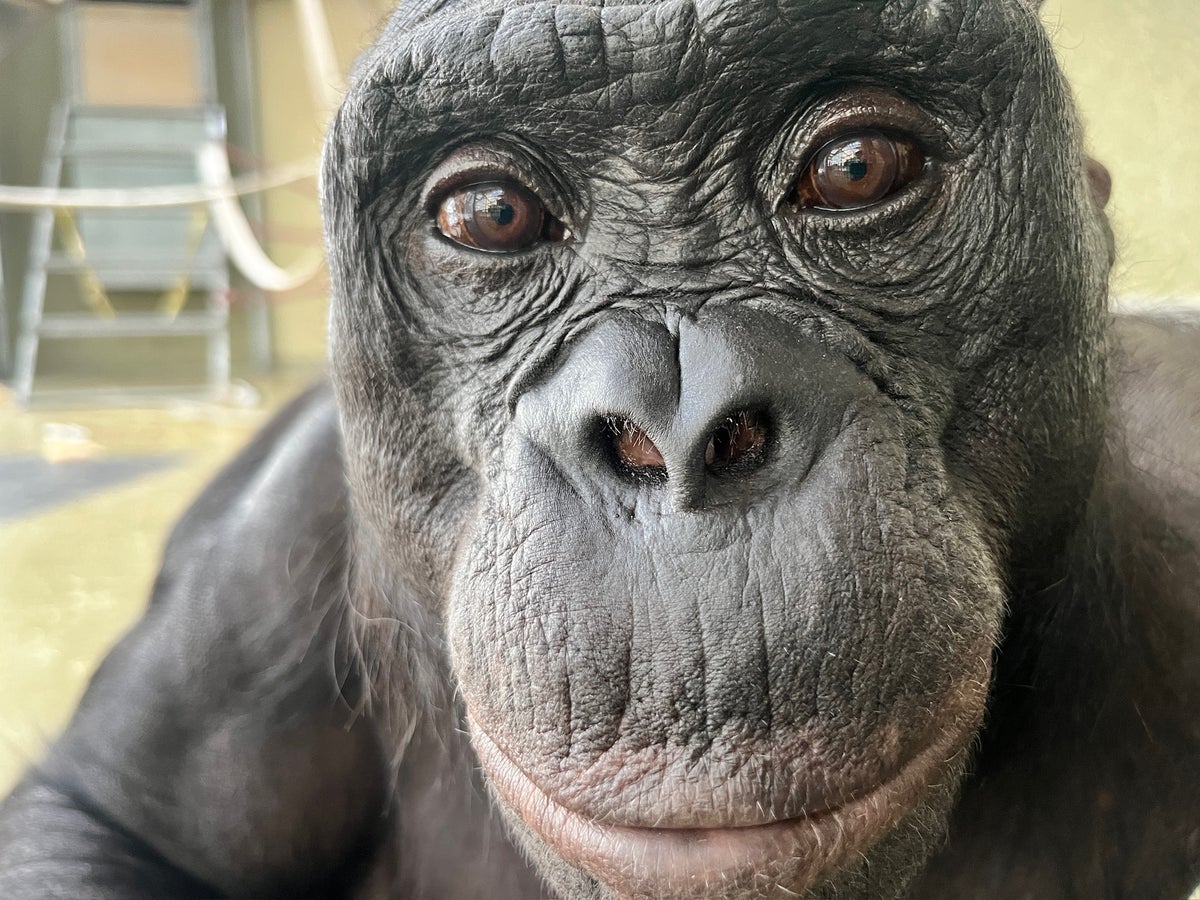
The news cluster highlights Kanzi the bonobo's capacity for imagination and understanding of 'pretend' actions, abilities previously thought to be uniquely human. This challenges the notion of human exceptionalism and illustrates the concept that complex cognitive functions exist on a spectrum across species, rather than being exclusive to humans, suggesting an evolutionary continuity in mental capacities.
The Continuum of Cognition
The latest dispatches from the world of bonobos offer a delightful, if slightly disquieting, whisper: Kanzi, the celebrated ape, appears to grasp the nuances of 'pretend.' He doesn't just mimic actions; he seems to understand the imaginary nature of a 'pretend' object or scenario. This isn't merely a parlor trick; it's a peek behind the curtain of a mind capable of imagination, a faculty long held aloft as the exclusive crown jewel of human consciousness. And with each such revelation, the notion of a strict cognitive hierarchy, with humanity perched serenely at the apex, crumbles a little further, revealing instead a vast, shimmering continuum of cognition.

This idea – that mental capacities are not a binary switch flipped on only for Homo sapiens, but rather a gradient stretching across the animal kingdom – is hardly new, yet it recurs with an insistent rhythm across eras and cultures. It's a notion that stubbornly persists because it is so deeply rooted in observation, challenging our comfortable anthropocentric narratives. From ancient fables imbuing animals with human-like cunning and wisdom, to the meticulous notes of naturalists, we’ve always sensed a kinship of mind, even as we’ve often resisted its full implications.
Consider Charles Darwin, whose revolutionary insights into evolution didn’t stop at physical form. In his 1871 work, The Descent of Man, and Selection in Relation to Sex, he didn't shy away from addressing the mental and moral faculties. He posited that there was no fundamental difference between man and the higher mammals in their mental faculties, only one of degree. Darwin meticulously detailed instances of animal intelligence, memory, attention, reason, and even rudimentary forms of morality and sympathy, arguing for an evolutionary continuity of mind just as profound as the continuity of body. His observations of animal emotions and problem-solving were not quaint anecdotes, but foundational stones for understanding a shared mental heritage.
“The difference in mind between man and the higher animals, great as it is, is certainly one of degree and not of kind.”
— Charles Darwin
Every time a new study reveals crows using tools, elephants mourning their dead, or, as now, a bonobo engaging in make-believe, Darwin’s quiet challenge resonates anew. It's a testament to the Lindy effect: an idea that has persisted for so long likely has profound truth at its core. These discoveries compel us to reconsider the very definition of intelligence, imagination, and even consciousness itself. What does it mean for us, as humans, if the capacity for abstract thought, for creating worlds that don't physically exist, is not our sole domain?
Kanzi's imaginative play isn't just a charming anecdote; it's a profound data point. It suggests an internal world, a capacity for symbolic thought and perhaps even a nascent theory of mind – the ability to attribute mental states to oneself and others. If our unique claim to imagination is now shared, where do we draw the lines? And what does this deeper understanding of a cognitive continuum demand of our ethics, our policies, and our very self-perception in a world teeming with other thinking, feeling beings?