The Consolidation of Power in Authoritarian Regimes
The news cluster illustrates a timeless concept from political science and history: the systematic consolidation of power by an authoritarian leader. Despite Zhang Youxia being a close ally and trusted second-in-command, his purge demonstrates how leaders like Xi Jinping eliminate potential rivals or centers of influence, even within their inner circle, to centralize control and ensure absolute loyalty. This process, often masked by anti-corruption campaigns, is a common mechanism for authoritarian regimes to remove perceived threats and solidify the leader's singular authority, as evidenced by Xi taking 'sole operational control' of the military.
The Unending Purge: Why Power Always Consolidates in the Hand of One
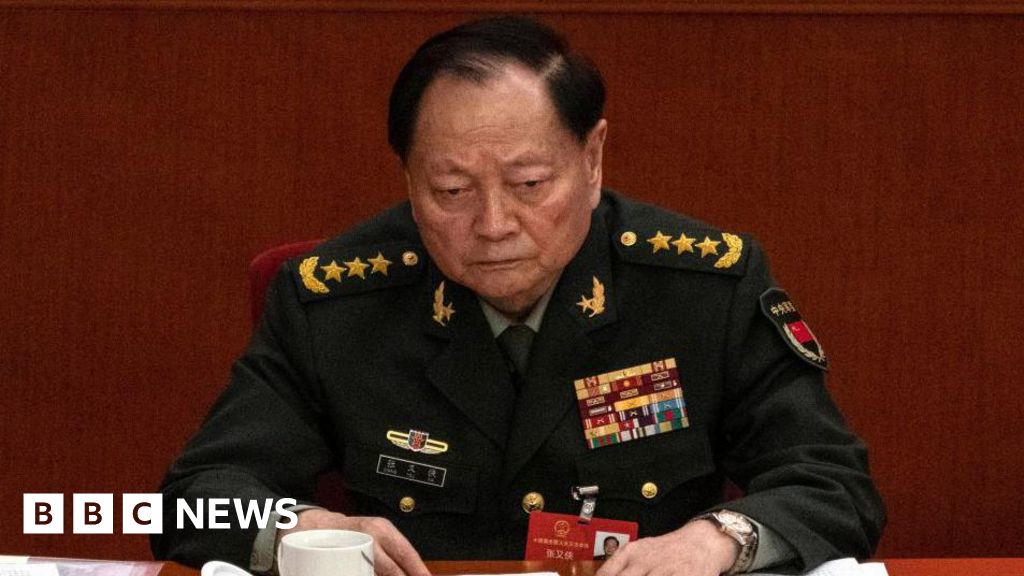
The recent news out of China, detailing the investigation and effective removal of General Zhang Youxia—a man widely considered President Xi Jinping’s closest military ally and second-in-command—offers a stark, contemporary lesson in a political dynamic as old as organized society itself. It’s a pattern that, once observed, seems to repeat with an almost ritualistic predictability across every era and culture where power is concentrated: the
systematic consolidation of authority by an authoritarian leader, often through the elimination of even their most trusted lieutenants.
This isn't merely a modern Chinese phenomenon, nor is it exclusive to any particular ideology. It is, rather, a timeless maneuver in the grand, brutal game of power. The leader, having ascended to a position of significant influence, inevitably faces an existential dilemma: how to secure that power absolutely. The answer, almost universally, involves dismantling any alternative centers of gravity. These might be rival factions, independent institutions, or, most insidiously, powerful individuals who, despite their loyalty, possess their own bases of support, their own networks, or simply too much influence for the leader's comfort. Such figures, however trusted, represent a latent threat, a potential pivot point for future dissent or a successor who might deviate from the chosen path.
Often, as we see with the ubiquitous "anti-corruption campaigns," these purges are cloaked in the righteous garb of moral cleansing or ideological purity. Yet, beneath the veneer of combating malfeasance, the true objective is the removal of perceived threats and the instillation of absolute, unblinking fealty to the singular authority. When Xi Jinping takes "sole operational control" of the military, it’s not just about efficiency; it's about eliminating any ambiguity regarding who commands, who decides, and who can be questioned.
History provides a chillingly clear echo of this process. Consider Joseph Stalin's Great Purge in the Soviet Union during the 1930s. Stalin, having outmaneuvered his rivals after Lenin's death, systematically set about eliminating anyone who could conceivably challenge his dominance. This wasn't limited to political opponents; it extended to many of the "Old Bolsheviks" who had fought alongside him, and crucially, to a vast swathe of the Red Army's high command. Marshal Mikhail Tukhachevsky, a brilliant military strategist and hero of the Civil War, was arrested, tortured, and executed in 1937 on fabricated charges of treason. He was a trusted figure, a pillar of the Soviet military establishment, but his independent stature and potential influence made him a threat to Stalin's absolute control. The result was a military utterly subservient to the dictator, albeit one severely weakened on the eve of World War II.
The mechanism is consistent: identify potential threats, even within the inner sanctum; fabricate or exaggerate transgressions; conduct a public purge; and consolidate the remaining power structure under the leader's singular, unchallenged command. It speaks to a fundamental insecurity inherent in authoritarianism: the constant fear that shared power, however minor, is always a prelude to its loss. But what, then, is the ultimate cost of such relentless, absolute consolidation? Does a regime, shorn of all independent voices and alternative power bases, truly become more stable, or merely more brittle?