Pilgrimage and Moral Exemplarism
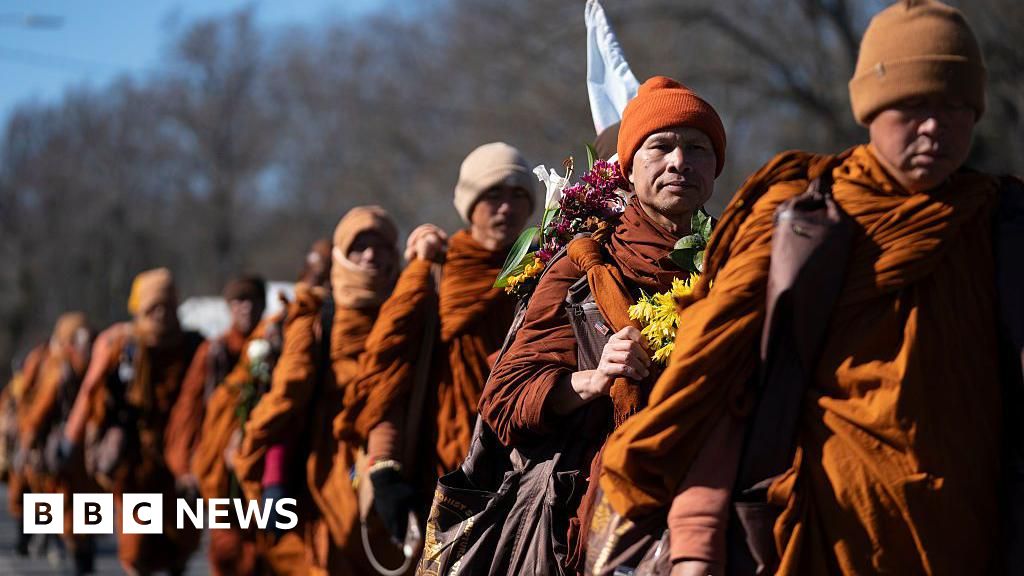
The news cluster illustrates the timeless concept of pilgrimage, where individuals undertake a long, arduous journey for a spiritual or moral purpose, often involving self-discipline and hardship. The Buddhist monks' 2,300-mile 'Walk for Peace' from Texas to Washington D.C., enduring frigid conditions and sometimes walking barefoot, perfectly exemplifies this. Furthermore, their dedication and perseverance serve as a powerful form of moral exemplarism, inspiring and captivating millions by demonstrating a profound commitment to peace through non-violent, symbolic action.
Pilgrimage as a Silent Sermon: Enduring Exemplarism
There's something profoundly resonant about a long walk. Not merely a hike, nor a commute, but a deliberate, arduous journey undertaken for a purpose far grander than mere arrival. The sight of Buddhist monks, draped in their humble robes, completing a 2,300-mile "Walk for Peace" from Texas to Washington D.C., braving frigid temperatures and sometimes walking barefoot, isn't just news; it's a living echo of a concept as old as human yearning: pilgrimage.
Pilgrimage, in its essence, is a spiritual or moral quest embodied in physical movement. It’s a willing embrace of hardship, a stripping away of comfort, designed to focus the mind and fortify the spirit. From the Hajj to Mecca, the Camino de Santiago to Jerusalem, or the ancient paths to Bodhgaya, humanity has forever understood the transformative power of the road. These journeys are not accidental; they are intentional acts of devotion, penance, or seeking, often punctuated by privation, which serves not as an obstacle but as an integral part of the experience.

What the monks' walk so powerfully illustrates, however, is not just the personal transformation of pilgrimage, but its outward-facing sibling: moral exemplarism. Their silent, steadfast progress across states, captivating millions, wasn't a lecture or a protest sign; it was a living demonstration. Each step, each blister, each frigid morning, became a visible testament to their profound commitment to peace. They weren't just advocating for peace; they were embodying it, making their very bodies an argument, their journey a sermon without words. This is the essence of exemplarism: inspiring others not by command, but by the compelling force of one's own lived example.
This phenomenon is far from new. Consider Mahatma Gandhi's Salt March in 1930. A deliberate, 240-mile walk to the Arabian Sea, undertaken by Gandhi and his followers to defy the British salt tax. It was a pilgrimage of civil disobedience, a symbolic act of non-violent resistance that galvanized a nation and captivated the world. Gandhi's frail figure, marching resolutely, became an icon of moral courage, demonstrating through action what decades of speeches had articulated. His pilgrimage was a masterclass in moral exemplarism, showing how a seemingly simple act, imbued with profound purpose and personal sacrifice, could spark a revolution.
Such acts endure across millennia because they speak to an innate human need for visible commitment. In a world awash with rhetoric, the tangible, the arduous, the self-sacrificing act cuts through the noise. It offers not just a message, but a mirror, reflecting the potential for profound dedication within us all. But in an age of instant gratification and digital disengagement, can the slow, arduous, and deeply personal act of pilgrimage still hold its ancient power to inspire and transform on a grand scale, or does its resonance become ever more fleeting?