Nuclear Dilemma
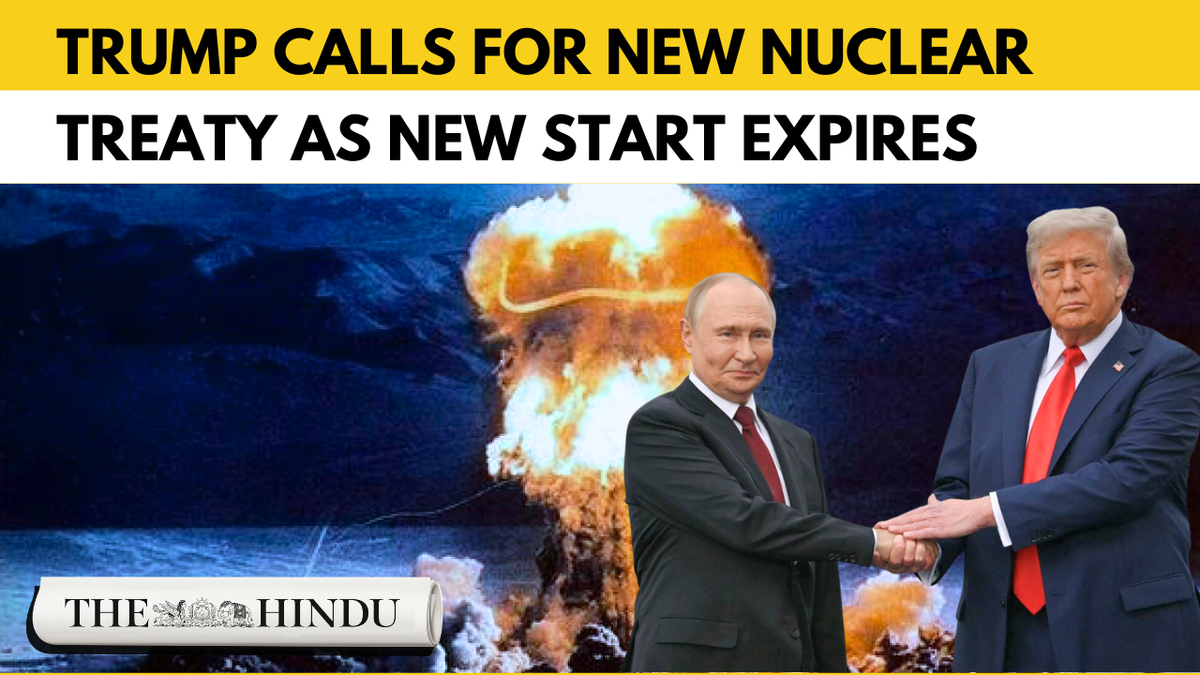
The expiration of the New START treaty, the last nuclear arms control agreement between the US and Russia, illustrates the nuclear security dilemma. Without a formal agreement, both nations may feel compelled to increase their nuclear arsenals for self-protection, perceiving the other's potential actions as a threat. This leads to a dangerous arms race, where each state's attempt to enhance its own security inadvertently diminishes the security of all, creating a cycle of mistrust and escalating competition.
The Echo of Distrust: New START and the Unending Nuclear Dilemma
The recent expiration of the New START treaty, that venerable framework for nuclear arms control between the United States and Russia, offers a stark, chilling echo of a dilemma as old as organized conflict itself. It's a moment when the world holds its breath, not because of a sudden, dramatic event, but because the scaffolding of trust, however thin, has been dismantled, leaving us to confront a fundamental paradox of security.
At its heart, this is the security dilemma, an idea that has haunted strategists and philosophers for centuries, long before the atom was split. It posits that when one state, seeking to enhance its own security – perhaps by building a stronger army, or in our current context, more advanced nuclear weapons – it inadvertently diminishes the security of others. These other states, perceiving a potential threat, feel compelled to increase their own military capabilities in response. The initial state then sees this response as further confirmation of the threat, prompting yet another escalation. It's a cruel, self-perpetuating cycle, where each actor's rational pursuit of safety leads, ironically, to a collective increase in danger.

The origins of this concept can be traced through the annals of history, manifesting in various forms. Thucydides, observing the Peloponnesian War, noted how Athens' growing power and the fear it instilled in Sparta were fundamental causes of the conflict. Hobbes, in his exploration of the state of nature, painted a picture of individuals constantly wary of each other, leading to a "war of all against all." It’s not merely about malice, but about uncertainty and the inherent difficulty of discerning another’s true intentions. Are those new missiles defensive or offensive? Is their military exercise a routine drill or a prelude to aggression?
We saw this play out with terrifying clarity during the Cold War. Both the United States and the Soviet Union, convinced of the other's hostile intentions, embarked on a colossal nuclear arms race. Each new bomber, each successive generation of intercontinental ballistic missile, was justified domestically as a necessary defensive measure, a deterrent against a perceived aggressor. Yet, from the opposing capital, these very same developments were seen as an ominous escalation, demanding a commensurate, if not superior, response. The result was an arsenal capable of ending civilization many times over, built not out of a desire for mutual destruction, but from a desperate, yet ultimately self-defeating, quest for individual security. The Cuban Missile Crisis, a historical moment of unparalleled peril, was a direct consequence of this very dynamic, where perceived threats and reactive buildups brought the world to the brink.
Today, with New START having expired, we find ourselves once more at this precipice. President Trump calls for a "better deal," while the Kremlin expresses its regret over the treaty's demise. Both sentiments, in their own way, acknowledge the precariousness of the situation. Yet, without a formal agreement, the default setting of the security dilemma takes over. Will nations feel compelled to modernize or expand their arsenals, not out of aggressive intent, but from a deep-seated fear of being left vulnerable? And if so, how do we ever truly break free from this ancient, insidious trap, where the very act of seeking safety only seems to make us less secure?