Mutually Assured Destruction (MAD) through Critical Infrastructure Targeting
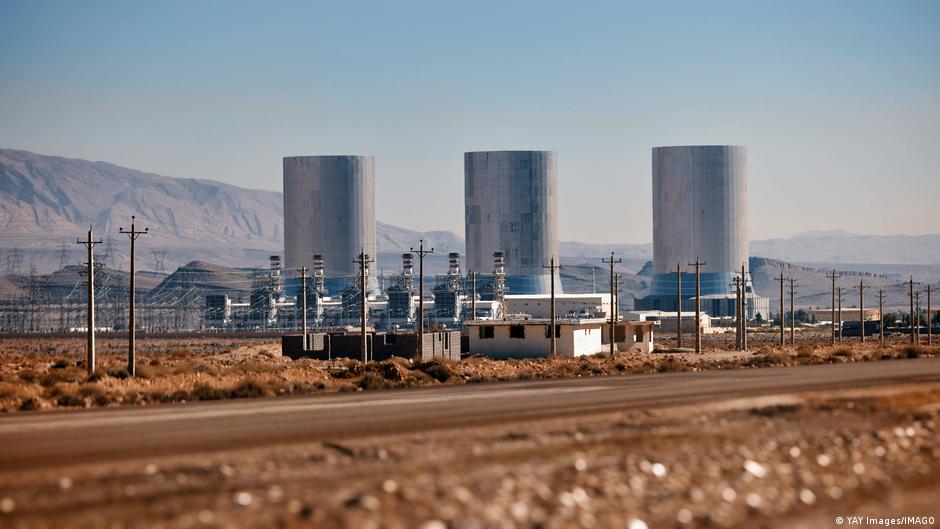
The news cluster vividly illustrates the concept of Mutually Assured Destruction (MAD), adapted to conventional warfare targeting critical civilian infrastructure. Both the United States (threatening to "obliterate" Iran's power plants) and Iran (threatening to "irreversibly destroy" vital energy and water desalination infrastructure across the region) possess the capability and stated intent to inflict unacceptable damage on the other, or on their allies, should an attack occur. The reliance of Persian Gulf states on desalination plants, in particular, highlights how an attack on such facilities would be "catastrophic" and lead to widespread humanitarian crises, making any first strike extremely costly and potentially self-defeating due to the guaranteed devastating retaliation. This dynamic creates a precarious balance where escalation carries existential risks for all parties involved, even without nuclear weapons.
The Old Logic in New Circuits: Mutually Assured Destruction and the Desalination Plant
The concept of Mutually Assured Destruction, or MAD, typically conjures images of mushroom clouds and the chilling arithmetic of nuclear arsenals. It's a strategic standoff born of the atomic age, where the sheer terror of annihilation keeps the peace. Yet, a disquieting adaptation of this ancient logic is playing out in the modern world, particularly in the arid, energy-rich lands of the Persian Gulf. Here, the specter of MAD looms not over intercontinental ballistic missiles, but over power grids, oil terminals, and, most critically, the fragile arteries of freshwater: desalination plants.
The news from the region paints a stark picture: the United States threatening to "obliterate" Iran's power plants, and Iran vowing to "irreversibly destroy" vital energy and water infrastructure across the region in retaliation. This isn't a game of nuclear brinkmanship, but a conventional clash threatening catastrophic humanitarian consequences. The underlying principle, however, is hauntingly familiar: inflict unacceptable damage, and expect the same in return.

The origins of deterrence, the philosophical bedrock of MAD, are as old as conflict itself. From ancient walled cities to the intricate fortifications of medieval Europe, the idea was to make the cost of attack outweigh the potential gain. The nuclear age simply amplified this to an existential degree, creating a macabre equilibrium where no one could win, only lose together. What we're witnessing now is the application of this same "lose together" calculus to the mundane, yet utterly indispensable, infrastructure that sustains modern life.
Consider the vulnerability. Persian Gulf states, by their very geography, are "saltwater kingdoms," utterly reliant on the miraculous conversion of seawater into potable water. An attack on these facilities isn't just an act of war; it's a direct assault on the very survival of millions, a guaranteed humanitarian disaster that would ripple far beyond immediate borders. The implication is clear: strike our power, and we strike your water. Damage our oil, and we target your lifeblood. The cost of a first strike becomes so immense, so self-defeating in its guaranteed retaliation, that it theoretically deters the initial act.
This isn't an entirely novel strategic thought. Throughout history, targeting an enemy's ability to sustain itself has been a brutal but effective tactic. Think of the strategic bombing campaigns of World War II. While not "mutually assured destruction" in the nuclear sense, the reciprocal targeting of industrial centers, transportation networks, and even civilian populations in cities like London, Dresden, or Tokyo, aimed to cripple the enemy's capacity and will to fight. The destruction of critical infrastructure—factories, railways, ports—was seen as a legitimate, if devastating, means to an end. Each side inflicted immense suffering and destruction upon the other's civilian support systems, creating a cycle of escalating retaliation that, while not leading to mutual annihilation, certainly led to mutually assured immense suffering and destruction of crucial civilian assets.
Today, the targets are more specialized, the interdependencies more acute. A liquefied natural gas plant in Qatar, a desalination facility in Bahrain, a power station in Iran—these are the new strategic choke points, the circuits through which the old logic of MAD now flows. The threats exchanged between the US and Iran are not just bluster; they are a stark articulation of a conventional deterrence doctrine, where the stakes are measured in human lives, economic collapse, and regional chaos, rather than megatons.
So, as the world holds its breath, watching the Strait of Hormuz and the delicate balance of power in the Middle East, one must ask: Does the clarity of mutually assured destruction, even without nuclear fire, still provide a stable deterrent, or does it merely guarantee a more prolonged and agonizing form of mutual collapse?