Filling the Political Vacuum
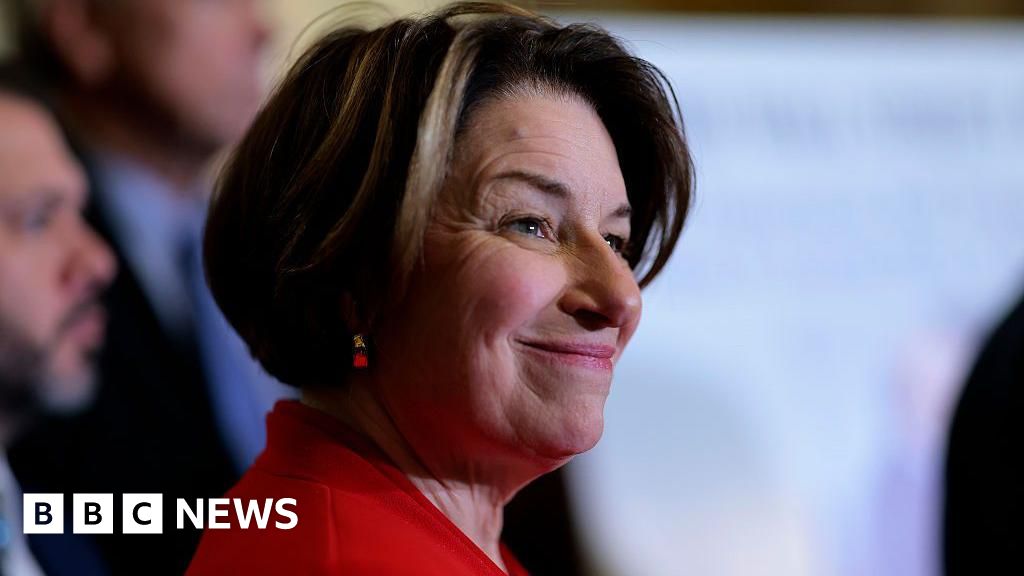
The news cluster illustrates the concept of a political vacuum, where the departure of an incumbent (Governor Tim Walz) creates an open opportunity that is quickly filled by another prominent political figure (Senator Amy Klobuchar). This demonstrates how political systems often abhor a vacuum, leading to strategic maneuvering and succession to maintain leadership and power.
Filling the Political Vacuum
The political stage, it seems, truly abhors a vacuum. Just as surely as air rushes into an empty space, the absence of an incumbent leader creates an immediate, almost magnetic pull for potential successors. We see this dynamic playing out with remarkable clarity in Minnesota, where Governor Tim Walz’s decision not to seek re-election swiftly paved the way for Senator Amy Klobuchar’s announcement for the governorship. It’s a move that feels less like a surprise and more like an inevitable outcome, a testament to a timeless truth about power and leadership.
This isn't merely a contemporary phenomenon; it's a principle as old as organized society itself. The idea that "nature abhors a vacuum" has roots in ancient Greek philosophy, notably Aristotle, who argued against the possibility of a void in the physical world. While the physicists have since complicated that notion, the political realm adheres to it with unwavering consistency. A political vacuum isn't just an empty chair; it's an absence of direction, a lapse in authority, a moment of potential instability that collective human psychology and ambition simply cannot long endure.
Why does this pattern recur across eras and cultures? Perhaps it speaks to our fundamental need for order, for a guiding hand, however flawed. Or perhaps it simply highlights the relentless nature of ambition. Power, after all, is a constant force, always seeking a vessel. When one vessel steps aside, another is invariably poised to take its place. Political systems, whether democratic or autocratic, are intricate webs of influence and control, and any sudden removal of a central node creates immense pressure on the surrounding threads to reconfigure and stabilize. There are always those who have been strategically positioning themselves, honing their message, building their alliances, ready to step into the breach.
Consider the immense vacuum left by the death of Alexander the Great in 323 BC. With no clear, adult heir to his vast empire, the political void was not merely felt; it exploded into decades of conflict. His most powerful generals, the Diadochi, immediately began a furious scramble, not just to claim parts of the empire, but to fill the singular leadership role Alexander had occupied. Ptolemy seized Egypt, Seleucus carved out a kingdom in the East, and Antigonus attempted to reunite the whole. This wasn't a gradual succession; it was an immediate, often violent, rush to occupy the immense space left by a dominating figure. The lesson is stark: power, once concentrated, does not simply vanish; it fragments and reconstitutes with astonishing speed.
Today, while the methods are thankfully less bloody, the underlying dynamic remains identical. Senator Klobuchar, a seasoned political figure with a national profile, was perfectly positioned. The moment Governor Walz signaled his departure, the political landscape of Minnesota shifted, and a new gravitational pull emerged. She wasn't merely entering a race; she was answering the call of an open system, filling a void that her party, and perhaps the electorate, instinctively felt. It’s a testament to the enduring reality that in the intricate dance of power, few spaces remain empty for long.
But as we observe this predictable filling of the vacuum, a larger question emerges: does this constant, almost automatic succession truly serve the evolving needs of the polity, or does it merely ensure the perpetuation of existing power structures, regardless of whether they are the best fit for the future?