Coercive Diplomacy
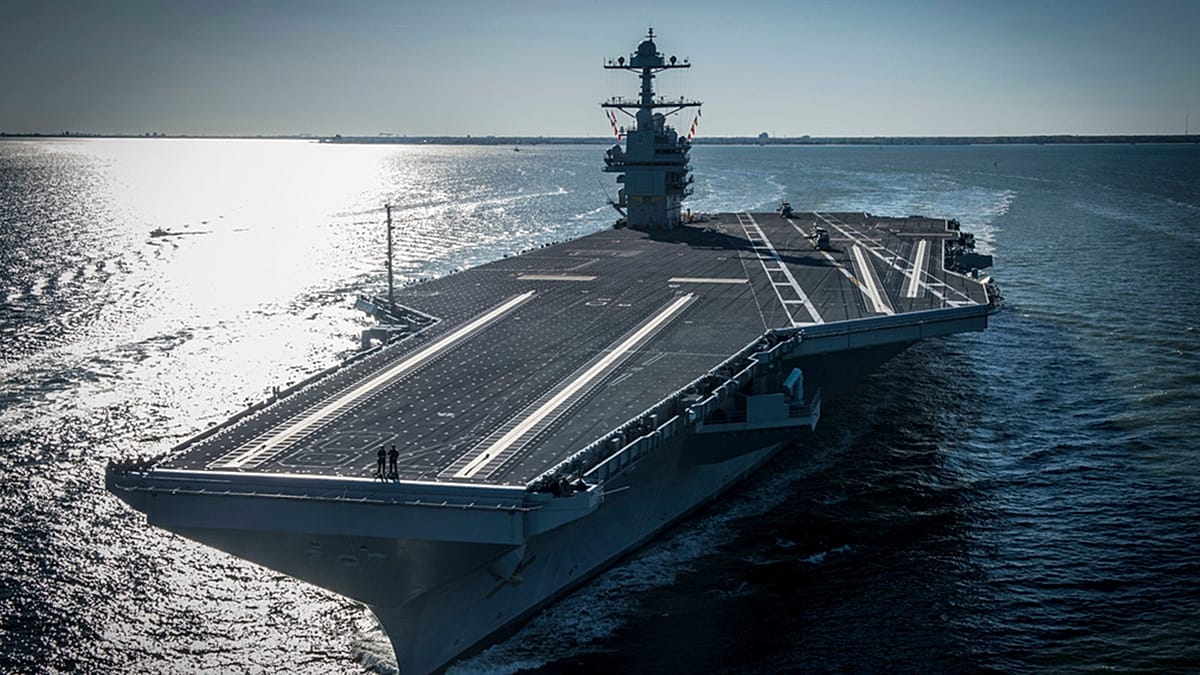
The news cluster vividly illustrates the concept of coercive diplomacy, a strategy in international relations where a state uses the threat of force to compel another state to change its behavior. The deployment of two U.S. aircraft carriers and numerous accompanying warships to the Middle East, explicitly described as a 'show of force' and an effort to 'coerce Iran into a deal over its nuclear programme,' demonstrates the use of military power as a tool of diplomatic leverage and intimidation, rather than immediate engagement in conflict.
The Ancient Art of the Unfired Shot: Coercive Diplomacy
The distant drumbeat of war often begins not with a bang, but with a calculated whisper of potential force. Witness the recent spectacle in the Middle East: a flotilla of American naval power, led by two colossal aircraft carriers, sailing into the region. This isn't just a military deployment; it's a carefully orchestrated theatrical performance, a "show of force" explicitly aimed at "coercing Iran into a deal over its nuclear programme." What we are observing, in real-time, is the enduring dance of coercive diplomacy.
At its heart, coercive diplomacy is the art of getting what you want from another party by threatening to hurt them more than they want to be hurt, but without actually inflicting that harm. It’s not about brute force, which aims to achieve objectives through direct military action. Rather, it’s about the strategic manipulation of risk and the credible communication of intent. The goal is to alter behavior, not to destroy capabilities or occupy territory. It’s the difference between holding a sword to someone’s throat to make them talk, and simply running them through.
The Lindy Principle of the Credible Threat
This isn't a modern invention, though its terminology and theoretical underpinnings gained prominence in the Cold War era, notably through the work of strategists like Thomas Schelling. The practice itself is as old as organized conflict. Empires have long understood that the visible massing of legions at a border, the display of a powerful fleet, or the mere reputation for ferocity could often achieve political aims without the costly, unpredictable business of actual combat. Why does it recur across eras and cultures? Because human nature, and statecraft by extension, consistently seeks the most efficient path to desired outcomes, and avoiding war is almost always preferable to fighting one.
Consider one of the most nail-biting acts of coercive diplomacy: the Cuban Missile Crisis of 1962. When the United States discovered Soviet nuclear missiles in Cuba, President Kennedy didn't immediately launch an invasion. Instead, he imposed a naval "quarantine" around the island, effectively daring the Soviets to challenge it. This was a clear, unambiguous threat of escalation, a signal that crossing the line would mean war. The implicit message was: remove the missiles, or we will remove them ourselves, and the consequences will be dire. The Soviets, faced with a credible threat of overwhelming conventional and potentially nuclear force, eventually backed down, agreeing to withdraw the missiles in exchange for a U.S. pledge not to invade Cuba and a secret agreement to remove U.S. missiles from Turkey. It was a masterclass in brinkmanship, where the threat of force, precisely calibrated and communicated, averted a catastrophic conflict.
Today, the deployment of carriers like the USS Gerald Ford and USS Abraham Lincoln serves a similar purpose. They are not merely ships; they are floating cities of power, symbols of immense destructive capability, projected thousands of miles from home. Their presence is a stark reminder to Tehran – and indeed, to the world – of the military options available to Washington. It is an attempt to create leverage, to shape perceptions of risk, and to compel a diplomatic resolution without firing a single shot. Yet, the tightrope walk is perilous. How does one ensure a threat is credible enough to deter, but not so provocative as to ignite the very conflict it seeks to avoid?
The dance of coercive diplomacy continues, a timeless strategy where the shadow of force is often more potent, and certainly less costly, than its physical manifestation. But in this delicate balance, where does the line between a convincing show of force and an accidental slide into conflict truly lie?