Challenging Diplomatic Norms and Non-Interference
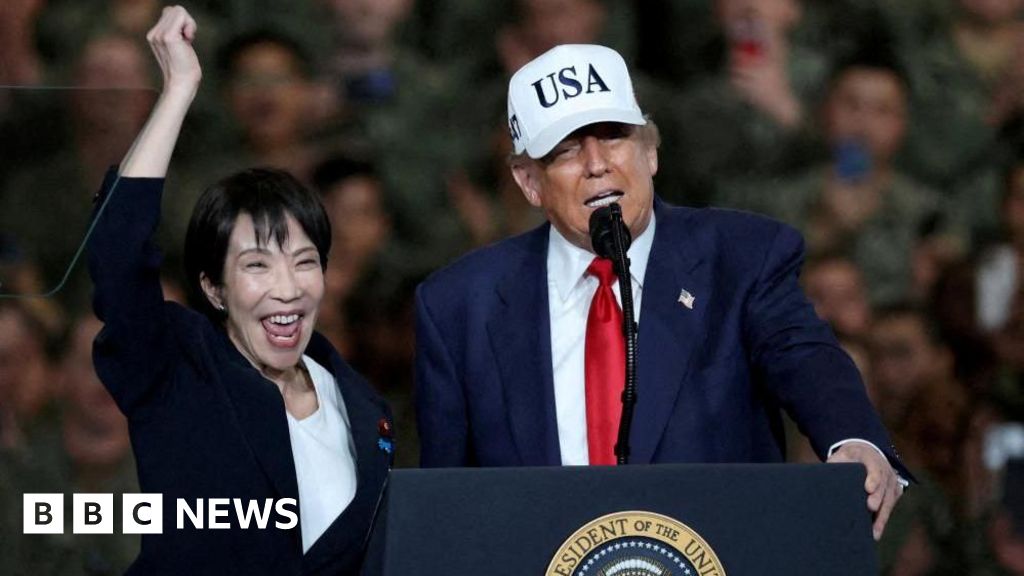
The news cluster highlights the rarity of a US president (even a former one) publicly endorsing a candidate in a foreign election. This act directly challenges established diplomatic norms and the principle of non-interference in the internal political processes of sovereign nations, illustrating how political figures can exert transnational influence and potentially redefine international diplomatic etiquette.
The Enduring Temptation of Transnational Meddling
There’s something distinctly jarring about a former — or even current — American president publicly endorsing a candidate in a foreign election. It feels, at first blush, like a breach of unspoken etiquette, a diplomatic faux pas of significant magnitude. The recent news of Donald Trump throwing his weight behind Japan’s Sanae Takaichi ahead of an election is a prime example, a move widely noted for its rarity and its blunt challenge to established diplomatic norms. But beneath the immediate headlines, this isn't just a quirky anomaly; it’s a fresh ripple in an ancient, turbulent current: the persistent human urge to interfere beyond one's borders, despite the long-standing principle of non-interference.
The idea that sovereign states should manage their own affairs without external meddling isn't some quaint, dusty notion. It’s a cornerstone of the modern international system, largely codified in the Peace of Westphalia in 1648. This historical accord, born from the brutal crucible of the Thirty Years' War, sought to establish a framework where states, regardless of their internal religious or political makeup, would respect each other’s territorial integrity and domestic jurisdiction. It was a pragmatic attempt to tame the chaos of ideological warfare, a recognition that endless meddling led to endless bloodshed. In essence, Westphalia suggested: you run your house, I’ll run mine.
Yet, like a moth to a flame, the temptation to intervene has proven irresistible across centuries and cultures. Why? Because the world is rarely so neatly divided. Ideologies spill over borders, economic interests intertwine, and what happens in "your house" often has very real consequences for "mine." When a leader, driven by conviction, strategic calculation, or even just personal affinity, sees a potential ally or adversary emerging in another nation's political landscape, the urge to nudge the scales can become overwhelming. It’s a recognition that influence, even if unofficial, can be a powerful tool of foreign policy, perhaps even more so when it sidesteps formal diplomatic channels.

Consider, for a moment, the aftermath of the French Revolution. The revolutionary fervor, with its radical ideas of liberty, equality, and fraternity, didn't stay confined within French borders. It terrified the monarchies of Europe, who saw their own legitimacy threatened by the spread of such dangerous notions. This wasn't just about territory; it was about ideology. The subsequent interventions and coalitions formed against revolutionary France weren't merely acts of conquest; they were desperate attempts to prevent the "infection" of revolutionary thought from undermining their own domestic order. The principle of non-interference, though nascent, was utterly disregarded in the face of what was perceived as an existential ideological threat. The desire to shape the internal politics of another nation, to secure a sympathetic regime or prevent a hostile one, is a timeless impulse.
Today, the tools have evolved. A former president's endorsement, amplified by global media and social platforms, is a far cry from marching armies across borders. But the underlying dynamic remains: a powerful figure attempting to exert transnational influence, to signal preferences, and perhaps to shape outcomes in a sovereign nation's internal political process. It blurs the lines between public opinion, private endorsement, and official statecraft. It forces us to ask: in an increasingly interconnected world, where information flows freely and individual voices can resonate globally, can the traditional walls of non-interference truly hold? Or are we witnessing the slow, inevitable erosion of a centuries-old norm, replaced by a more fluid, perhaps more chaotic, form of international engagement where personal influence becomes a legitimate, if controversial, instrument of foreign policy?