Accountability in Authoritarian Regimes
This concept perfectly illustrates how authoritarian states, after violently suppressing dissent, face an internal and external struggle for accountability. Despite the immense human cost and attempts at censorship, the 'catastrophe' forces a reckoning with human rights violations, highlighting the inherent difficulty of achieving justice within such systems. This ongoing demand for transparency can profoundly influence future political stability.
Accountability in Authoritarian Regimes
In the vast, ever-expanding Lindy Library of human experience, where ideas and challenges earn their shelf space not by novelty but by endurance, some volumes are perpetually in circulation. Among these enduring narratives is the relentless, often tragic, struggle for accountability within authoritarian regimes. It’s a story that unfolds across eras and cultures, a testament to the persistent human need for truth even in the face of overwhelming power and deliberate obfuscation. If a problem has haunted humanity for centuries, it likely reflects something fundamental about our nature or our institutions – and thus, it’s a problem that will continue to demand attention.
Authoritarian states, by their very design, seek to control narratives, suppress dissent, and present an image of unshakeable authority. When that authority resorts to brutal violence to quell its own populace, it creates what the context aptly terms a "catastrophe." The immediate aftermath is often characterized by a chilling silence, enforced by censorship and fear. Yet, the human cost, the sheer weight of lives lost and rights violated, rarely remains buried indefinitely. An internal wound festers, while external scrutiny, however slow or imperfect, begins to coalesce. This is where the Lindy principle truly bites: the demand for reckoning, for an explanation, for justice, is not a fleeting trend but an age-old impulse that no amount of state repression seems capable of eradicating.
Consider, for instance, the Soviet Union in the mid-1950s. After decades of Stalinist terror, characterized by purges and engineered famines that claimed millions of lives, Nikita Khrushchev delivered his infamous "Secret Speech" in 1956. This was not an embrace of Western-style accountability, certainly, but an internal, albeit limited, admission of past "abuses of power." The regime, despite its totalitarian grip, found itself compelled to acknowledge, however obliquely, the immense human cost of its own history. The ghosts of the Gulag, the memory of families shattered, pressed for some form of official recognition, influencing the trajectory of the Soviet system for decades to come, even if true justice remained elusive.
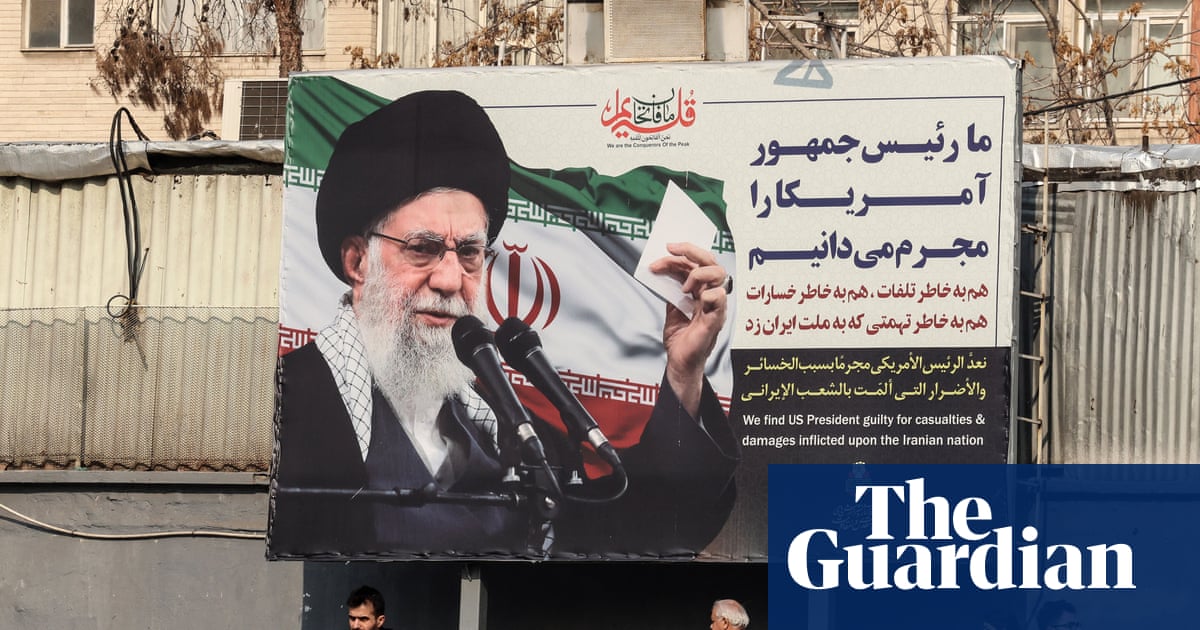
Today, we see this same ancient pattern playing out in contemporary headlines. In Iran, a significant internal discourse is now cautiously emerging regarding the "catastrophe" of violently suppressed protests, hinting at a reckoning with potentially tens of thousands of fatalities. This isn't a sudden change of heart, but rather the internal pressure of an unaddressed wound, a recognition that ignoring such immense suffering carries its own long-term costs for stability and legitimacy. Similarly, Israel's recent acknowledgment of Gaza's health authorities' death toll, estimating around 70,000 Palestinian fatalities, marks a significant shift. For a state to concede figures previously dismissed as propaganda speaks volumes about the persistent, undeniable weight of human loss, and the eventual, if reluctant, concession to facts on the ground, however grim.
These instances, separated by geography and specific circumstances, are threads in the same Lindy tapestry. They illustrate that the truth of human suffering, once unleashed, possesses an almost gravitational pull. It demands recognition, influencing internal political dynamics and external perceptions, shaping the very stability regimes strive so hard to maintain. The question, then, is not whether accountability will ever be demanded, but rather, what form it will ultimately take, and at what further human cost will its eventual, inevitable arrival be delayed?